
Order Status Login 0

April 08, 2026 8 min read

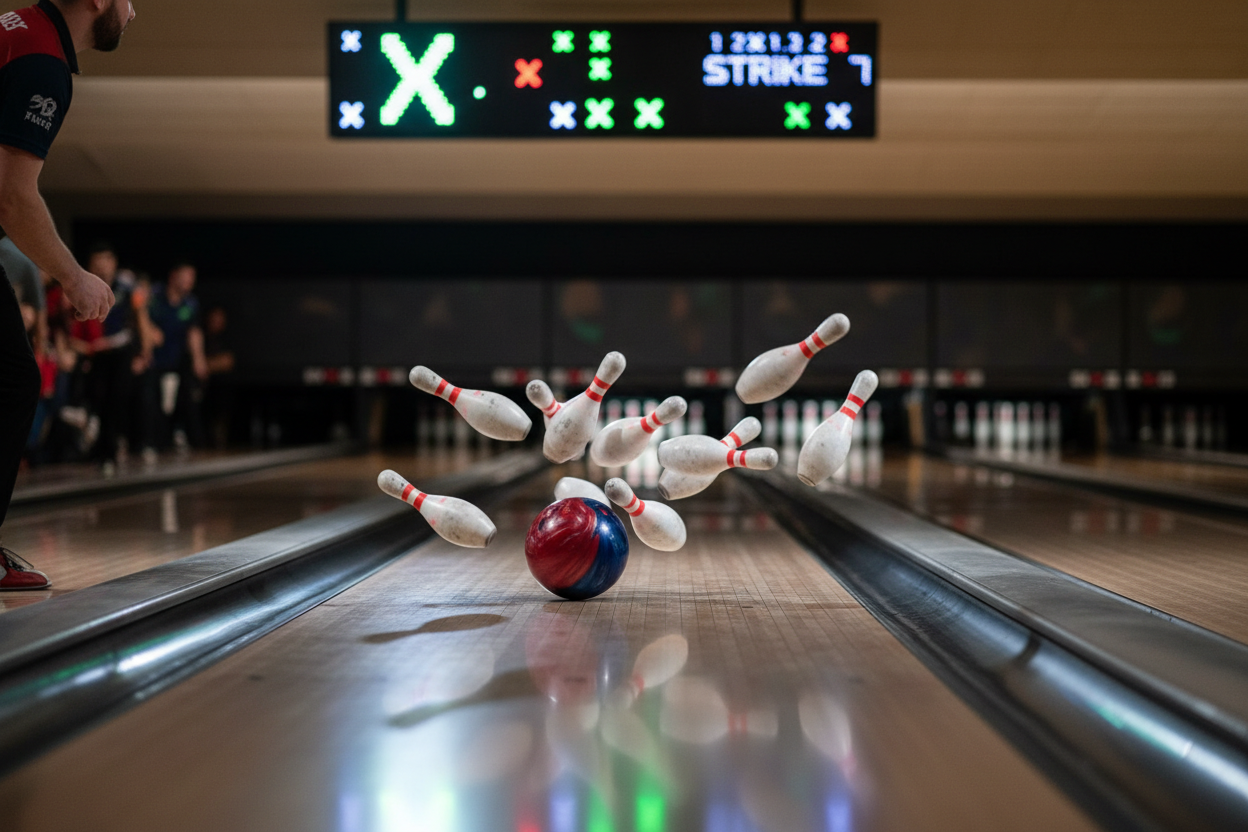
A perfect game of bowling requires 12 consecutive strikes to achieve the maximum score of 300 points. This includes one strike in each of the first nine frames, plus three strikes in the tenth frame which allows bonus balls when you strike. The 12-strike requirement stems from bowling's unique scoring system where strikes score 10 pins plus the next two balls, meaning the tenth frame's special rules grant additional opportunities to complete the perfect sequence. Achieving this feat represents bowling's ultimate individual accomplishment, combining technical mastery, mental toughness, and consistent execution under mounting pressure as the strike count increases.

How Many Strikes in a Perfect Game of Bowling?

Understanding the 12-Strike Requirement

The 12-strike total breaks down as nine strikes in frames 1-9, then three strikes in the tenth frame. Each of the first nine strikes scores 30 points because you get 10 pins plus the next two balls (which are also strikes worth 10 each). The tenth frame operates differently—when you strike with the first ball, you earn two bonus balls, and striking on all three tenth-frame deliveries gives you 30 points for that frame.

This scoring structure creates the mathematical path to 300: frames 1-9 contribute 270 points (9 frames × 30 points), while the tenth frame adds the final 30 points (three strikes). The progression builds as 30, 60, 90, 120, 150, 180, 210, 240, 270, 300, with each frame adding exactly 30 points when you maintain the strike streak. Missing even one strike breaks the sequence and prevents the 300, making perfection truly all-or-nothing. Understanding what is a perfect score provides complete context for this achievement.

The tenth frame's special structure allows the 12-strike sequence within a standard 10-frame game. Without this bonus ball provision, perfect games would require only 10 strikes but wouldn't reach 300 points. The USBC (United States Bowling Congress) established these rules to create bowling's scoring system that rewards consistency through bonus point accumulation. Bowlers wearing custom bowling jerseys in competitive leagues work toward this 12-strike milestone as bowling's ultimate achievement.

Frame

Strikes Needed

Running Score

Points This Frame

Frame 1

1 strike

30

30 (10+10+10)

Frame 5

5 strikes

150

30 (10+10+10)

Frame 9

9 strikes

270

30 (10+10+10)

Frame 10

12 total strikes

300

30 (10+10+10)

Why 12 Strikes Instead of 10

Bowling's scoring system creates the 12-strike requirement through its bonus structure. Unlike most sports where each scoring opportunity stands independently, bowling awards bonus points based on subsequent performance. A strike in frame one doesn't finalize its score until you complete frame two—you need to know what the next two balls produce to calculate the frame one total.

This interdependent scoring creates situations where the tenth frame needs special rules to allow proper score calculation. When you strike in frame nine, you need two more balls to determine that frame's final score. The tenth frame's structure provides those balls through its bonus system, which also creates the opportunity for strikes eleven and twelve that complete the 300-point perfect game.

The tenth frame allows up to three balls when you strike or spare, ensuring all previous frames can be properly scored with their bonus points. Without this provision, frame nine strikes couldn't receive their full 30-point value because you wouldn't have two subsequent balls to count. The system's elegance lies in how the tenth frame's bonus structure simultaneously enables proper scoring for frame nine while creating the path to perfection through the twelfth strike. Professional bowlers in Storm bowling jerseys understand this scoring complexity intimately, often using equipment like the Storm Phaze AI bowling jersey designed for consistent strike performance.

How Many Strikes in a Perfect Game of Bowling?

The Difficulty of 12 Consecutive Strikes

Achieving 12 consecutive strikes requires extraordinary consistency under mounting pressure. Even professional bowlers with exceptional skill strike approximately 60-70% of frames on typical house patterns, meaning 12 straight strikes represents statistical rarity even at elite levels. For recreational bowlers averaging 150-180 who strike 30-40% of frames, the mathematical probability of a perfect game approaches 0.002%—roughly 2 in 100,000 games.

The challenge compounds because each strike increases pressure for the next ball. After a turkey (three strikes), you're aware of building something special. By strike eight or nine, the mounting tension affects heart rate, hand steadiness, and mental focus, potentially disrupting the mechanics that created the earlier strikes. The physical difficulty remains constant, but psychological pressure intensifies dramatically as the 300 becomes increasingly tangible.

Professional bowlers train specifically for high-pressure situations, developing mental resilience that allows consistent execution regardless of stakes. They practice visualization techniques, breathing exercises, and pre-shot routines that calm nerves during crucial strikes. Recreational bowlers often lack this mental training, making pressure management their biggest obstacle to perfect games even when they possess the physical skill for consistent striking. Competitive players wearing Hammer bowling jerseys or Motiv bowling jerseys invest significant practice time on mental toughness alongside physical technique. Equipment like the Hammer Black Widow Mania bowling jersey or Motiv Jackal Onyx bowling jersey provides consistent ball reaction that supports strike repeatability.

Strike Progression Through the Game

The first three strikes establish rhythm and confidence but don't yet create significant pressure—you're simply bowling well without the weight of perfection looming. Strikes four through six solidify the foundation and begin building awareness that something special might develop, though you're only halfway through the strike requirement at strike six.

Strikes seven and eight heighten awareness considerably. At this point, the 300 becomes a realistic possibility rather than a distant dream, and pressure begins affecting some bowlers' execution. Most bowlers can feel their heart rate increase and palms begin sweating as they approach strike nine—the frame where perfection shifts from possible to probable with proper execution.

Strike nine marks the critical turning point where the 300 feels within reach. Only the tenth frame remains, and you know exactly what's required: three more strikes. The pressure peaks during strikes ten, eleven, and twelve as you execute the final sequence. Many bowlers report that strike ten feels most pressured because it's the first ball where you consciously realize you're in position to complete the perfect game. Strikes eleven and twelve often feel slightly easier because you've already handled the initial tenth-frame pressure and simply need to repeat the motion twice more.

League culture affects pressure intensity—some leagues maintain complete silence during perfect game attempts, creating supportive but tense atmospheres. Others continue normal conversation, treating 300s as expected rather than exceptional. The environment significantly impacts how pressure manifests and whether bowlers can maintain the focus needed for final strikes. Professional bowlers in Roto Grip bowling jerseys or 900 Global bowling jerseys develop resilience across varying atmospheres through extensive competitive experience.

How Many Strikes in a Perfect Game of Bowling?

Technical Requirements for Strike Consistency

Achieving 12 strikes requires mastering fundamental bowling mechanics: consistent approach footwork, accurate targeting, proper release technique, and appropriate ball selection. The margin for error remains minimal—strikes require balls entering the pocket within a 2-3 board window at optimal entry angles, typically 4-6 degrees for right-handed bowlers.

Ball speed consistency matters tremendously. Varying speed by even 1-2 mph between shots creates different ball reactions that can miss the pocket despite identical hand position and target line. Rev rate consistency ensures similar ball motion shot after shot. You must replicate your physical game precisely across 12 deliveries, maintaining identical mechanics despite mounting pressure and potential fatigue.

Equipment selection plays crucial roles in strike consistency. Using balls matched to lane conditions optimizes strike potential—too aggressive and you'll hook too much, too weak and you'll miss light. Professional bowlers often use the same ball throughout perfect game attempts to eliminate variables, adjusting only hand position or target line as oil patterns break down. Understanding how to hook a bowling ball and how to add spin provides the technical foundation necessary for generating consistent strikes. Tournament players showcasing equipment like the Roto Grip Optimum Idol bowling jersey or 900 Global Zen 25 bowling jersey demonstrate the importance of matched equipment to physical game characteristics.

How Many Strikes in a Perfect Game of Bowling?

Lane Conditions and Perfect Games

Modern house shot patterns feature heavy oil in the middle and dry boards outside, creating forgiving conditions that guide balls toward the pocket even on slightly offline shots. These patterns significantly increase strike percentages compared to sport patterns, making perfect games more achievable for average bowlers. A ball 2-3 boards offline on a house shot might still strike, while the same miss on a sport pattern leaves difficult spares.

Fresh oil versus broken-down conditions affect strike consistency dramatically. Fresh oil demands more aggressive ball motion to generate adequate hook, while broken-down patterns need controlled motion to prevent over-hooking. Successfully navigating these transitions during a perfect game attempt requires both technical skill and tactical awareness—you must adjust your game as conditions change without disrupting the strike rhythm.

Sport bowling patterns with flatter oil distribution provide far less room for error, explaining why professional tournaments using these patterns see fewer perfect games despite featuring elite bowlers. The PBA Tour sees multiple 300s per tournament on modified house patterns, but sport pattern events might feature only one or two perfect games across entire tournaments with 100+ competitors. Competitive bowlers in Brunswick bowling jerseys or Radical bowling jerseys adjust their expectations based on pattern difficulty. Equipment like the Brunswick Hypnoize bowling jersey provides versatility for varying conditions.

How Many Strikes in a Perfect Game of Bowling?

Historical Context and Frequency

The first sanctioned 300 game was bowled in 1902, though documentation from that era remains limited. As equipment and lane technology improved throughout the 20th century, perfect games became progressively more common. The introduction of automatic pinsetters in the 1950s standardized pin placement, while reactive resin balls in the 1990s dramatically increased strike potential through aggressive coverstock materials.

Modern bowling sees tens of thousands of sanctioned 300 games bowled annually in the United States alone, compared to perhaps hundreds per year in the 1960s-1970s. This frequency increase stems primarily from equipment technology advances and more bowler-friendly lane conditions. Contemporary bowling balls hook more dramatically and carry pins better than equipment from previous decades, making strikes achievable on hits that would have left pins standing 30-40 years ago.

Professional bowlers achieve perfect games regularly, with some PBA Tour players bowling dozens or even hundreds of career 300s. However, perfect games on difficult sport patterns remain rare even at professional levels, maintaining challenge levels closer to historical standards when all bowling featured tougher conditions. For recreational bowlers, achieving their first perfect game often represents a career-defining moment worthy of celebration and commemoration. Players in Track bowling jerseys or DV8 bowling jerseys pursue this milestone throughout their competitive careers.

How Many Strikes in a Perfect Game of Bowling?

Beyond Perfection: Multiple 300s

Some elite bowlers achieve multiple perfect games in single sessions, bowling 600 series (two games), 700 series (three games with one 300), or even the ultra-rare 900 series (three consecutive 300 games). A 900 series requires 36 consecutive strikes, making it exponentially rarer than a single 300. Only a handful of sanctioned 900 series exist in bowling history, representing the sport's most exclusive achievement.

Professional bowlers with dozens or hundreds of career 300 games maintain perspective about each accomplishment. While individual perfect games become routine at elite levels, the consistency required to average 220+ demands treating each shot with respect. This professional mindset prevents complacency while maintaining focus necessary for sustained excellence.

Amateur bowlers who achieve their first 300 often pursue additional perfect games with renewed confidence. The breakthrough demonstrates perfection is possible, motivating continued skill development. Some eventually achieve multiple 300s, while others bowl decades without repeating the feat—each perfect game remains special regardless of frequency.

How Many Strikes in a Perfect Game of Bowling?

Conclusion

A perfect game of bowling requires 12 consecutive strikes—one in each of the first nine frames plus three strikes in the tenth frame—to achieve the maximum score of 300 points. This requirement stems from bowling's unique cumulative scoring system where strikes count as 10 pins plus the next two balls, with the tenth frame's special rules allowing bonus balls that complete the strike sequence. The difficulty of achieving 12 straight strikes ranges from extraordinarily rare for recreational bowlers (perhaps once in tens of thousands of games) to regularly achievable for professional players on favorable lane conditions, though even elite bowlers treat perfect games as significant accomplishments requiring technical mastery and mental toughness. By understanding the scoring mechanics behind the 12-strike requirement and developing both physical skills and mental resilience to handle mounting pressure, bowlers at all levels can pursue this ultimate bowling achievement. Visit EFX to discover premium bowling apparel that helps you look professional as you work toward your perfect game goals on the lanes.

References

Professional Bowlers Association. (2024). Perfect game statistics and achievement records. PBA Historical Archives, 2024 Edition.

United States Bowling Congress. (2024). Scoring systems and perfect game requirements. USBC Rule Book, Chapter 3.

National Bowling Academy. (2024). Strike consistency and perfect game pursuit. Bowling Performance Quarterly, 16(1), 45-63.

Weber, D. (2023). The mathematics and psychology of bowling perfection. Journal of Bowling Science, 29(2), 123-142.