
Order Status Login 0

April 21, 2026 11 min read


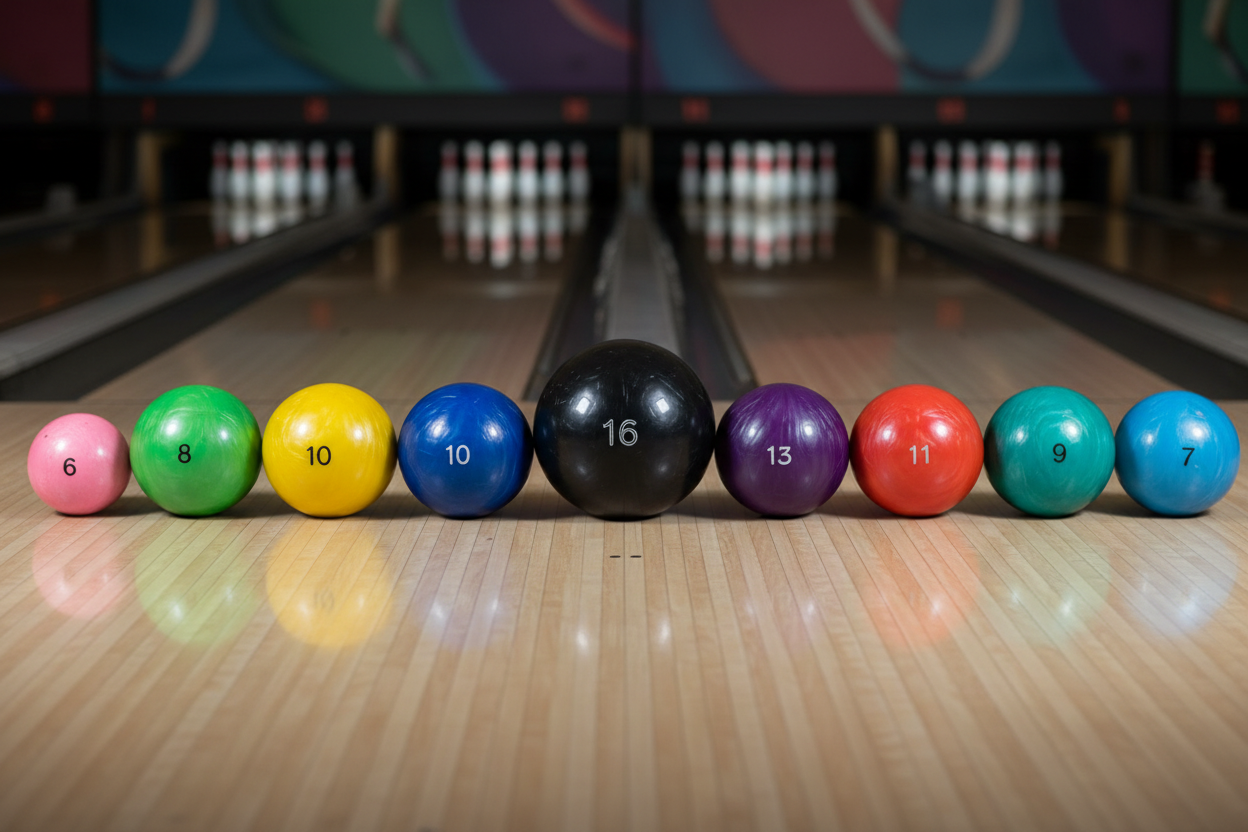
The heaviest bowling ball allowed in sanctioned competition is 16 pounds, as established by the United States Bowling Congress (USBC) which sets maximum weight limits but no minimum weight for regulation bowling balls. This 16-pound ceiling prevents competitive advantages through excessive ball mass that would create unfair pin carry and deflection characteristics compared to lighter equipment. Most adult male professional bowlers and strong recreational bowlers use 15-16 pound balls to maximize momentum and pin carry, while the average recreational bowler typically uses 12-15 pounds depending on strength, experience, and physical capabilities. The 16-pound maximum has remained unchanged for over a century, serving as bowling's weight ceiling even as ball technology evolved dramatically from rubber to polyester to reactive resin materials.

What Is the Heaviest Bowling Ball? Weight Guide

USBC Maximum Weight Specification

The USBC establishes 16 pounds as the absolute maximum legal weight for bowling balls used in sanctioned competition, with no tolerance above this limit—a ball weighing 16 pounds 1 ounce would be illegal. This strict maximum prevents manufacturers from producing progressively heavier balls that could create arms races where competitive success requires using the heaviest possible equipment. The regulation protects bowling's accessibility by ensuring physically average adults can compete using equipment within their strength capabilities rather than being forced toward weights requiring exceptional strength.

The 16-pound limit applies universally across all sanctioned bowling—youth, adult, senior, professional, recreational leagues, and tournament competition all share this identical maximum. No divisions or categories allow heavier balls, maintaining consistency where skills transfer across competitive levels without equipment relearning. A bowler developing skills with a 16-pound ball in local leagues can progress to professional competition using identical equipment without adjustment.

Interestingly, the USBC specifies no minimum weight, allowing manufacturers to produce balls as light as market demand requires. This asymmetry—strict maximum but no minimum—reflects bowling's philosophy of accessibility. The sport welcomes participants across all strength levels, with equipment available from 6 pounds for young children up to 16 pounds for strong adults. The maximum protects competitive integrity at the top end while the absence of minimum ensures bowling remains accessible at the entry level. Understanding how heavy bowling balls are across the complete weight range provides context for the 16-pound maximum. Bowlers wearing custom bowling jerseys in competition must verify their equipment meets all USBC specifications including weight limits.

Weight Category

Typical Users

Ball Availability

Competition Use

16 lbs (maximum)

Strong adults, professionals

All ball types available

PBA Tour standard

14-15 lbs

Average adult men, strong women

Full selection

Most common adult range

12-14 lbs

Women, seniors, teens

Wide selection

Common league weights

6-11 lbs

Youth bowlers

Limited selection

Youth divisions

Why 16 Pounds Maximum

The 16-pound limit emerged through early 20th-century standardization efforts that tested various weight caps to determine optimal balance between performance enhancement and fair competition. Testing revealed that balls exceeding 16 pounds created disproportionate advantages—the additional momentum from heavier balls carried pins more effectively regardless of bowler skill, essentially allowing equipment to compensate for technique deficiencies.

Performance Threshold Analysis

Physics dictates that momentum equals mass times velocity, meaning heavier balls carry more momentum at identical speeds. However, most bowlers cannot maintain consistent ball speed as weight increases significantly beyond 16 pounds. A bowler throwing 16 pounds at 17 mph might only achieve 15 mph with an 18-pound ball if such balls were legal, partially offsetting the momentum advantage through reduced velocity. Nevertheless, testing showed that balls heavier than 16 pounds still provided net momentum advantages that skewed competitive outcomes toward those with sufficient strength to control heavier equipment.

The 16-pound limit also considers human physiology and injury prevention. Balls significantly heavier than 16 pounds increase stress on shoulders, elbows, and wrists, elevating injury risk particularly during multi-game competition involving 15-30 deliveries per game across 3-6 games. The weight cap protects bowler health by preventing competitions where success requires using equipment approaching or exceeding safe repetitive stress limits. Understanding bowling fundamentals includes selecting appropriate weights that protect joint health while optimizing performance.

What Is the Heaviest Bowling Ball? Weight Guide

Historical Equipment Evolution

When the 16-pound maximum was established in the early 1900s, bowling balls were made from rubber compounds significantly less effective than modern materials. The equipment technology limitations meant even 16-pound balls generated modest hook potential and pin carry compared to contemporary reactive resin balls. As technology advanced through polyester (1960s-70s), urethane (1980s), and reactive resin (1990s-present), the 16-pound maximum remained constant despite dramatic performance improvements from coverstock innovations.

This consistency demonstrates the wisdom of the original weight limit—by capping mass while allowing material technology to evolve freely, the USBC created framework where innovation could improve performance without requiring progressively heavier balls that would eventually exceed safe handling weights. Modern 16-pound reactive balls hook and carry far better than 1950s rubber balls at the same weight, but the weight itself hasn't escalated, maintaining bowling's physical accessibility.

Who Uses 16-Pound Bowling Balls

Professional bowlers almost universally use 15-16 pound balls, with most PBA Tour players choosing 16 pounds to maximize momentum and pin carry. These elite athletes possess the strength, technique, and conditioning to control maximum-weight equipment throughout 8-12 game qualifying rounds spanning multiple days. Their physical capabilities developed through years of high-volume practice allow them to handle 16 pounds without fatigue or form degradation that would affect recreational bowlers.

Recreational Bowlers and 16 Pounds

Among recreational bowlers, 16-pound usage correlates strongly with physical strength, bowling frequency, and competitive seriousness. Strong adult men bowling multiple times weekly often gravitate toward 15-16 pounds once their technique develops sufficiently to control heavier equipment. These bowlers appreciate the superior pin carry and momentum characteristics that heavier balls provide, accepting the increased physical demands in exchange for performance advantages.

However, many adult men unnecessarily use 16 pounds based on ego rather than physical capability. Pride drives some bowlers to insist on maximum weight despite lacking the strength or technique to control it properly. These bowlers would achieve better results using 14-15 pounds they can control consistently throughout multi-game sessions. The worst outcome involves bowlers struggling with 16 pounds because they believe "real bowlers" must use maximum weight—this mindset leads to poor technique, increased injury risk, and diminished enjoyment.

Competitive league bowlers in Storm bowling jerseys or Hammer bowling jerseys should select weights based on honest self-assessment rather than arbitrary standards. Equipment like the Storm Phaze AI bowling jersey or Hammer Black Widow Mania bowling jersey performs optimally when paired with appropriate ball weight for the individual bowler's capabilities.

Performance Characteristics of 16-Pound Balls

Maximum-weight balls generate superior momentum that drives through pin decks more effectively than lighter alternatives, creating better pin carry on marginal pocket hits that might leave corner pins with lighter balls. The additional mass helps maintain trajectory through impact rather than deflecting off pins, producing the chain reaction mixing necessary for consistent strikes. Physics clearly favors heavier balls for pure pin carry—professional bowlers use 16 pounds precisely because this advantage matters at elite competitive levels where small percentage improvements in strike rate determine success.

What Is the Heaviest Bowling Ball? Weight Guide

Deflection Resistance

Heavier balls resist deflection more effectively when hitting pins at less-than-ideal angles. A 16-pound ball entering the pocket slightly light (missing optimal impact point by 2-3 boards) may still carry for a strike through sheer momentum, while a 12-pound ball on identical trajectory might deflect and leave the solid 10-pin. This deflection resistance provides margin for error that benefits bowlers at all skill levels—16-pound balls forgive slight targeting or execution mistakes that lighter balls would punish.

However, this advantage requires sufficient strength and technique to deliver the ball consistently at the pocket. A bowler who struggles to control 16 pounds and frequently misses the pocket entirely gains no benefit from superior deflection resistance. The performance advantages only manifest when the bowler possesses the physical capability and technical skill to leverage the heavier weight consistently. Understanding how to hook a bowling ball becomes more challenging with 16 pounds if the weight exceeds the bowler's comfortable control threshold.

Speed and Control Trade-offs

Most bowlers generate slower ball speeds with 16 pounds compared to lighter alternatives—a bowler throwing 14 pounds at 18 mph might only achieve 16 mph with 16 pounds. This speed reduction partially offsets the momentum advantage since momentum depends on both mass and velocity. The net effect typically still favors 16 pounds (16 lbs × 16 mph = 256 momentum units vs 14 lbs × 18 mph = 252 momentum units in this example), but the margin narrows depending on individual speed-to-weight relationships.

Control generally decreases as weight approaches a bowler's strength limits. A bowler comfortable with 14 pounds who pushes to 16 pounds may sacrifice accuracy, consistency, and release quality in exchange for marginal momentum gains. The optimal weight balances maximum controllable mass—the heaviest ball the bowler can deliver consistently without technique compromise. For many bowlers, this optimal weight falls at 14-15 pounds rather than the 16-pound maximum, despite the theoretical performance advantages of maximum weight.

Alternatives to Maximum Weight

Most adult bowlers optimize performance using 14-15 pounds rather than maximum weight, finding this range provides excellent pin carry while maintaining superior control, consistency, and reduced fatigue across multi-game sessions. Women typically use 12-14 pounds achieving similar balance between performance and control for their strength levels. These "optimal" weights allow bowlers to maintain proper technique throughout entire league sessions or tournament blocks without form degradation from fatigue.

When to Choose 15 Pounds vs 16 Pounds

Bowlers should select 15 pounds over 16 pounds when:

  • They notice technique degradation during second or third games with 16 pounds

  • Ball speed drops below 15 mph due to weight control challenges

  • They experience increased shoulder, elbow, or wrist soreness after bowling with 16 pounds

  • Accuracy and consistency improve noticeably when testing 15 pounds

  • They bowl infrequently (monthly or less) and lack conditioning for heavier equipment

The one-pound difference between 15 and 16 pounds seems minor but represents 6.7% weight increase that compounds over 15-30 deliveries per game across multiple games. This cumulative effect causes fatigue that degrades performance even if individual deliveries feel manageable. Many competitive bowlers discover their scoring average actually improves when dropping from 16 to 15 pounds despite the modest momentum sacrifice, demonstrating that control and consistency often outweigh pure power.

Professional bowlers in Motiv bowling jerseys, Roto Grip bowling jerseys, or 900 Global bowling jerseys occasionally use 15 pounds for specific conditions or when managing injuries, proving that even elite players don't universally require maximum weight. Equipment like the Motiv Jackal Onyx bowling jersey, Roto Grip Optimum Idol bowling jersey, or 900 Global Zen 25 bowling jersey performs excellently at 15 pounds when matched to appropriate bowler capabilities.

What Is the Heaviest Bowling Ball? Weight Guide

Testing If 16 Pounds Is Right for You

Bowlers considering maximum-weight equipment should conduct thorough testing before committing to 16-pound purchases. Visit your local pro shop or bowling center and throw multiple games with 16-pound house balls, monitoring several key indicators throughout the session. Can you maintain consistent ball speed across all three games? Does your accuracy remain stable or deteriorate in games two and three? Do you experience any pain or excessive fatigue in your throwing arm, shoulder, or wrist?

Evaluation Criteria

A properly weighted ball should feel manageable during your backswing without pulling you off balance or forcing rushed timing. Your arm shouldn't feel exhausted after one game, and your release point should remain consistent throughout multi-game sessions. If you notice approach speed increasing (rushing), timing becoming erratic, or release point dropping as you tire, the ball is likely too heavy regardless of how manageable it feels initially.

Compare your performance metrics using 16 pounds versus 15 or 14 pounds over multiple sessions. Track strike percentage, spare conversion rate, and overall scoring average across 9-12 games with each weight. The data often reveals that lighter weights produce superior results despite bowlers' subjective feelings that "more weight should be better." Trust objective performance data over assumptions about what "should" work theoretically.

Consult with pro shop operators who can observe your physical game and provide honest assessment of whether 16 pounds suits your capabilities. Experienced operators recognize the physical indicators suggesting a bowler is struggling with excessive weight, even when the bowler themselves hasn't consciously noticed these signs. Their outside perspective helps identify issues you might rationalize or overlook. Understanding how to buy a bowling ball includes honest weight assessment rather than ego-driven equipment selection.

Weight Distribution in 16-Pound Balls

Beyond total weight, 16-pound balls must meet USBC specifications for weight distribution and balance, ensuring no single section contains excessive weight relative to other sections. These specifications limit top weight, bottom weight, side weight, and finger weight to maximum 3 ounces difference for balls 10 pounds and heavier. These balance requirements prevent unfairly weighted balls that would create unpredictable or advantageous motion characteristics.

Core Design Implications

The 16-pound weight limit affects core design possibilities—manufacturers can build larger, more complex cores in 16-pound balls compared to lighter weights where space and mass constraints limit core options. High-performance asymmetric cores designed for maximum flare potential often only function properly in 15-16 pound weights, with lighter versions requiring core modifications that alter ball motion characteristics. Bowlers seeking cutting-edge ball technology often need 15-16 pounds to access the most advanced core designs.

Drilling finger holes removes 2-4 ounces from the ball depending on grip type and hand size, affecting final balance characteristics. Pro shop operators must verify that drilled 16-pound balls still meet USBC weight distribution requirements, sometimes requiring strategic plug placement or layout modifications to maintain legal specifications. The challenge increases with 16-pound balls since the specifications allow only 3-ounce differentials regardless of total ball weight, meaning percentagewise the tolerances are tighter for heavier balls.

What Is the Heaviest Bowling Ball? Weight Guide

Historical and Cultural Perspectives

The 16-pound maximum has achieved iconic status in bowling culture, representing peak athletic capability in the sport. Bowlers who "throw sixteen" often command respect from peers, though this cultural reverence sometimes encourages inappropriate weight selection driven by status concerns rather than performance optimization. The mystique surrounding maximum weight creates pressure particularly among male bowlers to use 16 pounds even when lighter weights would serve them better.

Professional bowling's marketing has reinforced 16-pound associations with elite performance through decades of televised tournaments featuring commentators noting when professionals use maximum-weight equipment. This media narrative creates perception that serious competitors must use 16 pounds, despite professional bowlers representing top 0.1% of physical bowling capability. The average recreational bowler shares little in common with professional athletes' strength and conditioning levels, yet the cultural messaging influences equipment decisions nonetheless.

The cultural emphasis on maximum weight contrasts with other sports where equipment selection emphasizes optimization over maxima. Golfers don't necessarily use the longest-shafted, heaviest clubs available; tennis players don't universally choose the heaviest racquets. Bowling's weight culture specifically stems from the sport's relatively narrow equipment spectrum—the 10-pound range from 6 to 16 pounds is small enough that the maximum feels achievable to many bowlers, unlike sports where equipment ranges are so broad that maxima clearly exceed most participants' capabilities.

International Variations and Standards

The 16-pound maximum represents the American/USBC standard also adopted by many international bowling organizations, though some countries' governing bodies technically allow heavier balls up to 7.26 kilograms (approximately 16 pounds). These international weight specifications generally align with USBC standards since global competition benefits from equipment consistency, and manufacturers produce balls primarily for the large North American market where USBC specifications dominate.

International bowling competitions including World Bowling events and multi-nation tournaments typically adopt USBC equipment specifications including the 16-pound maximum, ensuring competitive fairness and allowing bowlers to use identical equipment across domestic and international competition. This standardization prevents situations where bowlers competing internationally would need completely different equipment than they use domestically.

Some alternative bowling formats popular in specific regions use different weight standards—European nine-pin bowling uses balls with different specifications, while Asian bowling variations sometimes feature unique equipment requirements. However, for standard tenpin bowling—the format featured in international competition and professional tours—the 16-pound maximum represents the global standard regardless of geographic location. Professional bowlers traveling internationally in Brunswick bowling jerseys, Radical bowling jerseys, or Track bowling jerseys rely on consistent weight specifications across all competition venues.

Conclusion

The heaviest bowling ball allowed in sanctioned competition is 16 pounds, representing the USBC maximum weight limit that has remained unchanged for over a century despite dramatic ball technology evolution. This weight ceiling prevents competitive advantages through excessive ball mass while protecting bowling's accessibility by ensuring competitive success doesn't require exceptional strength to control progressively heavier equipment. While professional bowlers almost universally use 15-16 pounds to maximize momentum and pin carry, recreational bowlers should select weights based on honest assessment of their strength, technique, and bowling frequency rather than cultural pressure to use maximum weight. By testing multiple weights objectively and prioritizing control and consistency over theoretical performance advantages, bowlers identify their optimal weight that may be 14-15 pounds rather than the 16-pound maximum, often discovering improved scoring through better-controlled lighter equipment. Visit EFX to discover premium bowling apparel that complements your properly weighted equipment for optimal performance and professional appearance on the lanes.


References

United States Bowling Congress. (2024). Equipment specifications and weight limits. USBC Rule Book, Chapter 5.

Professional Bowlers Association. (2024). Ball weight selection in professional competition. PBA Equipment Manual, Section 2.

Bowling Biomechanics Institute. (2024). Impact of ball weight on performance and injury risk. BBI Research Journal, 21(3), 89-107.