
December 26, 2025 8 min read
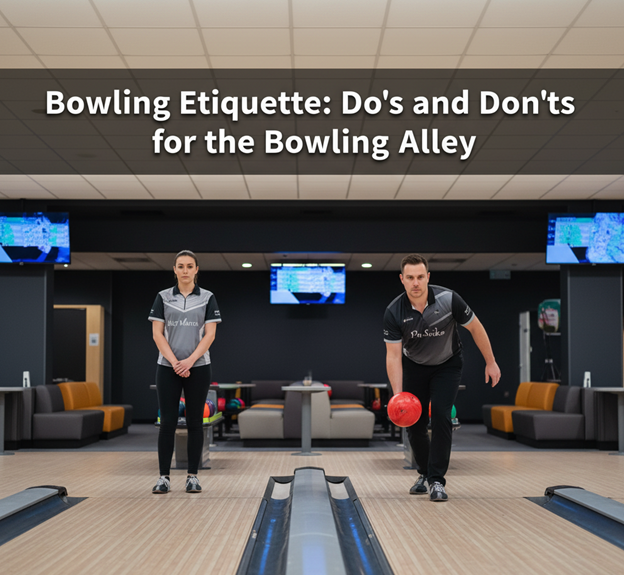
Bowling etiquette refers to the shared rules of conduct that guide how bowlers move, behave, and interact on the lanes. These standards protect safety, maintain lane flow, and support fair play so that every bowler—whether in a league, a tournament, or a casual night out—can enjoy a smooth experience.
Because Apparel EFX has deep roots in the bowling community and specializes in performance-ready, sublimated bowling jerseys, the topic aligns naturally with the brand’s commitment to professionalism, comfort, and shared respect on the lanes. Understanding bowling etiquette is essential for anyone seeking to improve their play and contribute positively to the alley environment.
Bowling etiquette is the set of courtesy rules that govern how bowlers share space on a bowling lane, move through the approach area, take turns, and respect others’ play. It ensures smooth lane flow by clarifying when to enter the approach area, how to manage ball selection, how to avoid disrupting scoring, and how to behave during both league play and recreational bowling. These rules apply whether the lane includes two casual players or ten teammates rotating through frames.
Bowling etiquette covers behaviors on the bowling lane, spacing on the approach area, scoring procedures, and lane courtesy during moments when bowlers on adjacent lanes approach simultaneously. For instance, in recreational bowling, two bowlers should avoid stepping on the approach at the same time, while in league play the courtesy rules may extend to a full lane (one-lane or two-lane courtesy). When bowlers follow these guidelines consistently, they reduce collisions, prevent performance interference, and help maintain the rhythm of a standard 10-frame game. Ultimately, etiquette ensures that a shared leisure activity functions with the predictability and respect found in organized sports.
Bowling etiquette matters because it protects safety, ensures fair and predictable lane flow, and preserves the overall environment of the bowling alley. First, safety is essential because the approach is typically a dry, smooth surface positioned about 6–8 feet before the foul line—any sudden entry, spill, or misstep can cause slips and injuries. Second, courtesy rules maintain fair play by preventing distractions and allowing each bowler a consistent opportunity to execute their shot. These rules apply across league, tournament, and recreational settings.
Etiquette also shapes the atmosphere of the bowling center. Loud disruptions, lane crossing, and delayed frames can frustrate players and affect scoring consistency. Competitive bowlers rely on predictable timing between shots to maintain focus, while casual players need clear boundaries to learn the sport comfortably. Whether in a high-stakes league with official scoring or a family outing on a Saturday night, properly applied etiquette improves the momentum, sportsmanship, and shared enjoyment of the game.
Before diving into deeper etiquette principles, these core rules apply to every bowler in any bowling alley:
These habits create a foundation for smooth gameplay and lead naturally to the more advanced etiquette found in league environments.
A few essential “do’s” help create a respectful, efficient bowling experience:
● Do wear clean, lane-safe shoes so the approach remains free of residue or moisture that can cause slips. Apparel EFX jerseys pair well with appropriate footwear for a polished look.
● Do be ready when it’s your turn by having your ball selected and stance prepared before entering the approach.
● Do celebrate quietly and respectfully so you acknowledge success without distracting nearby players.
● Do offer sportsmanlike congratulations in league play because respectful interactions build a positive team environment.
● Do use proper shooting stance on the approach to avoid drifting into adjacent lanes.
● Do keep your ball in your assigned rack so others can easily identify their equipment.
● Do monitor your surroundings to avoid sudden entry onto the approach when bowlers are preparing to shoot.
These do’s reinforce professionalism and help every bowler feel supported.
Avoiding certain behaviors is just as important as practicing good habits:
● Don’t step onto another bowler’s lane or approach, as this distracts their shot and may violate lane courtesy rules.
● Don’t loft the ball dangerously, because high-impact throws can damage equipment or create unpredictable bounces.
● Don’t delay frames unnecessarily, since slow pace affects scoring rhythm and frustrates other bowlers.
● Don’t cross the foul line intentionally, as the oiled lane surface is extremely slippery and unsafe.
● Don’t touch others’ bowling balls without permission, especially personal or custom equipment.
● Don’t eat or drink on the approach area, because spills may make the floor unsafe.
These don’ts prevent accidents and improve the overall flow of the game for everyone involved.
Lane courtesy requires allowing adjacent bowlers a straightforward approach before taking your own shot. Standard three-point courtesy means the bowler to your right has priority if both of you approach together. One-point courtesy requires allowing the bowler directly beside you a full opportunity to bowl before you step forward. In league play, expanded courtesy rules may prevent bowlers on either side—sometimes across 2–3 lanes—from entering the approach at the same time.
Recreational bowlers typically follow one-lane courtesy, while tournaments employ stricter systems to maintain concentration. Spacing between bowlers on the approach is generally maintained at about 6–8 feet, ensuring each player has adequate personal space. By consistently following these rules, bowlers reduce distractions and maintain a steady, predictable rhythm throughout the game.
The approach area requires calm, controlled movement and clear awareness of others. Bowlers should step onto the approach only when ready to shoot and leave immediately afterwards to maintain game flow. The floor must remain dry at all times; moisture or residue tracked from the seating area increases the risk of slipping.
Safety guidelines include checking for stray balls, avoiding sudden running starts, and respecting personal space around bowlers preparing to throw. Families with children should provide close supervision to prevent kids from wandering onto active approaches. Competitive players rely heavily on their routine, so quiet and minimal movement near the approach supports fairness for all.
Equipment etiquette includes understanding ball ownership, properly storing personal equipment, and handling house balls with care. Bowlers should never take another person’s ball without consent, especially custom balls designed with grip-specific drilling. When using house balls, players should return them promptly to the ball rack instead of leaving them on seats or the floor.
The ball return area is a shared space that requires discipline—bowlers should remove balls quickly to prevent jams and avoid placing their hands near the return opening. Ball weight selection usually falls between 10–16 lbs; beginners should select weights they can control safely. League bowlers often bring accessories, such as towels, grip aids, or shoes, which should be stored neatly near their lane. Respecting this equipment reduces clutter and keeps the game flowing efficiently.
Caption: Bowling Ball & Equipment Etiquette
Alt text: bowling-ball-and-equipment-etiquette
Team and league bowling rely on coordinated rotation, communication, and consistent sportsmanship. Wearing professional apparel—such as custom sublimated jerseys from the Apparel EFX bowling jersey collection—reinforces team identity and contributes to the league’s sense of organization and respect.
For bowlers seeking brand-specific performance designs, teams often prefer pieces inspired by Hammer bowling jerseys for their bold visuals and strong lane identity.
Sportsmanship includes acknowledging strong shots from opponents, avoiding negative comments, and honoring the scoring process. Wearing professional apparel, such as custom sublimated jerseys from Apparel EFX, reinforces team identity and contributes to the league’s sense of organization and respect.
Shared-lane etiquette with beginners involves patience, guidance, and calm supervision.
Key considerations include:
● Allowing a slower pace so new players can learn the basics
● Teaching rules gently without overwhelming them
● Permitting bumpers or ramps when needed
● Managing higher noise levels respectfully without disrupting nearby lanes
Supporting beginners creates an inclusive environment and strengthens the social aspect of bowling.
Do:
● Applaud at appropriate moments without shouting during active shots.
● Stay behind the players’ seating area to avoid blocking the approach view.
● Keep flash photography off to prevent distractions.
Don’t:
● Don’t walk in front of bowlers preparing to throw.
● Don’t shout advice mid-shot.
● Don’t sit on ball return structures or interfere with equipment.
Proper bowling attire requires wearing lane-safe bowling shoes and comfortable athletic clothing that supports full range of motion. Moisture-friendly fabrics reduce sweat buildup and improve grip during play. League bowlers often wear coordinated team jerseys, which enhance team unity and professionalism. Apparel EFX’s sublimated custom bowling jerseys provide breathable performance fabric explicitly designed for the sport’s movements and approach mechanics.
● Walking onto the approach while another bowler prepares
● Leaving balls scattered around the seating area
● Forgetting to remove hands quickly from the ball return
● Ignoring lane courtesy rules during simultaneous approaches
● Taking excessively long turns that slow game flow
● Allowing children to run into active lanes
Each mistake disrupts concentration, slows scoring, and introduces unnecessary risks.
If someone breaks bowling etiquette, the best response is to remain calm and polite. A gentle reminder—such as noting lane courtesy or approach spacing—can resolve most issues. When safety is at stake, involve trained lane staff to manage disruptions. Keeping interactions non-confrontational ensures that everyone remains comfortable and the game continues safely.
Summary: Practising Bowling Etiquette for a Better Experience
Understanding and practising bowling etiquette enhances safety, improves lane flow, and elevates the shared experience of the sport. These rules create order in both recreational and competitive settings and help players perform confidently. Whether bowling with friends, participating in a league, or wearing a performance-ready Apparel EFX jersey, good etiquette supports professionalism and makes every frame more enjoyable.
Most leagues and tournaments begin with a handshake before the first ball is thrown, but in casual play, it varies. A brief greeting before the 10-frame game sets a respectful tone and aligns with standard sportsmanship practices.
Talking is acceptable until a bowler steps onto the approach. Once a player begins their pre-shot routine, noise should drop to a minimum to protect concentration and maintain fairness across all active lanes.
Bowling centres require lane-safe shoes with clean soles to protect the approach surface. Street shoes are prohibited because dirt or moisture can cause slipping hazards and disrupt players’ footing.
No. Only one bowler should be on the approach, following one-lane or two-lane courtesy depending on the setting. Simultaneous entry disrupts timing and increases the risk of distraction.
Yes, as long as the change doesn't delay play. Bowlers often use different balls for spares or varying oil patterns, especially in league environments.
Many bowlers do, particularly in league play, because oil buildup affects grip and hook potential. Wiping should be done quickly to avoid slowing the rotation.
Yes, if the bowling centre permits it. Bumpers are primarily for beginners or casual fun and should not be used in competitive or league settings.
Indirectly, yes. Spectators should avoid walking or standing directly behind the approach where bowlers rely on a clear visual field.
Switching lanes during a game is discouraged unless the staff instructs it due to a technical issue. Scoring systems are calibrated per lane.
Cheering is normal, but yelling during someone’s shot, slamming equipment, or playing excessively loud music breaks standard bowling decorum and distracts nearby players.