
Order Status Login 0

April 14, 2026 9 min read


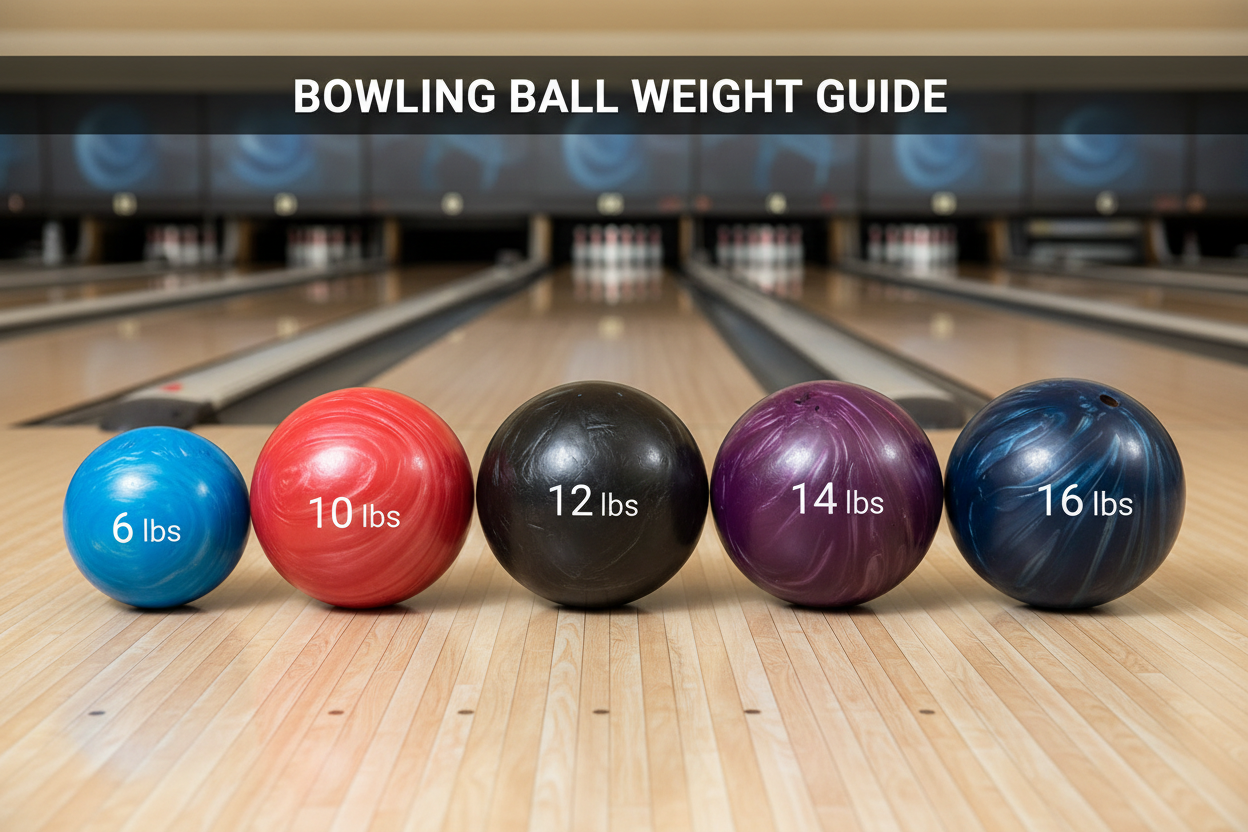
Bowling balls range from 6 pounds to 16 pounds, with adult bowlers typically using 12-16 pound balls while youth and senior bowlers often prefer 6-12 pound options. The USBC (United States Bowling Congress) sets maximum weight at 16 pounds with no minimum, allowing manufacturers to produce balls accommodating all age groups and strength levels. Most adult men use 15-16 pound balls, adult women typically bowl with 12-14 pound balls, and children use 6-10 pound balls depending on age and strength. Selecting appropriate weight involves balancing control, comfort, and pin carry—the ball should feel manageable throughout your entire approach without causing fatigue or compromising technique.

How Heavy Are Bowling Balls? Weight Guide

Standard Bowling Ball Weight Range

Modern bowling balls span a 10-pound range from 6 to 16 pounds, accommodating diverse bowler populations from young children to strong adults. This range ensures everyone can find appropriate equipment regardless of physical capabilities. The USBC establishes 16 pounds as the maximum sanctioned weight, preventing competitive advantages through excessive ball mass that would create unfair pin action.

No official minimum weight exists, allowing manufacturers to produce balls as light as needed for youth development programs and adaptive bowling for people with physical limitations. House balls at bowling centers typically stock 6-16 pound options in one or two-pound increments, providing reasonable selection for casual bowlers. However, serious bowlers typically purchase custom balls in their precise preferred weight.

Weight selection significantly impacts both performance and comfort. Heavier balls generate more momentum that drives through pins more effectively, creating better pin carry and strike potential. However, excessive weight compromises control, accuracy, and causes fatigue that degrades technique over multi-game sessions. The optimal weight balances these competing factors based on individual strength, bowling frequency, and skill level. Bowlers wearing custom bowling jerseys in league competition carefully select weights matching their physical capabilities and competitive goals.

Weight Range

Typical Users

Characteristics

Pin Carry

6-8 lbs

Young children (ages 5-8)

Very light, easy control

Limited

9-11 lbs

Older children, small adults

Manageable weight

Moderate

12-14 lbs

Teens, women, seniors

Good balance

Good

15-16 lbs

Adult men, strong bowlers

Maximum momentum

Excellent

How Weight Affects Performance

Ball weight directly influences two critical performance factors: momentum and deflection. Heavier balls carry more momentum through the pin deck, continuing their path through impact rather than deflecting off pins. This momentum transfer creates better pin carry, helping marginal pocket hits carry for strikes that lighter balls might leave as splits or stubborn corner pins.

How Heavy Are Bowling Balls? Weight Guide

Momentum and Pin Action

A 16-pound ball entering the pocket at 17 mph carries significantly more momentum than a 12-pound ball at the same speed, driving through pins more effectively. The heavier ball maintains its trajectory better through impact, creating the chain reaction pin scatter necessary for consistent strikes. Physics dictates that momentum equals mass times velocity, meaning weight increases directly boost momentum for identical speeds.

However, most bowlers cannot maintain identical ball speeds across different weights. A bowler throwing 16 pounds at 17 mph might throw 12 pounds at 19 mph, partially offsetting the momentum difference through increased velocity. The relationship between weight and speed varies individually—some bowlers maintain speed across weights while others show significant speed increases with lighter balls. Professional bowlers in Storm bowling jerseys typically use 15-16 pounds to maximize pin carry, accepting slightly reduced speed for superior momentum. Equipment like the Storm Phaze AI bowling jersey pairs with proper weight selection for optimal performance.

Control and Accuracy

Lighter balls generally provide better control and accuracy, especially for bowlers still developing technique or those with limited strength. A 12-pound ball allows more controlled approach mechanics, smoother timing, and less physical strain than a 16-pound ball requiring greater strength throughout the swing. Beginners particularly benefit from lighter weights that let them focus on fundamentals without fighting heavy equipment.

The control advantage diminishes as strength and technique improve. Advanced bowlers develop the strength and mechanics to control 15-16 pound balls as easily as beginners control 12-pound balls. For these bowlers, maximum weight provides superior performance without sacrificing control. Understanding bowling fundamentals helps determine when you're ready for weight increases.

How Heavy Are Bowling Balls? Weight Guide

Weight Selection Guidelines

The traditional guideline suggests selecting 10% of your body weight up to the 16-pound maximum, providing reasonable starting points for most bowlers. A 150-pound person would start with a 15-pound ball, while a 120-pound person might begin with 12 pounds. However, this formula oversimplifies the decision by ignoring critical factors like hand strength, bowling frequency, age, and physical conditioning.

Individual Factors Affecting Weight Choice

Hand and arm strength matter more than overall body weight for ball control. A strong 130-pound athlete might handle 14-15 pounds comfortably, while a less active 170-pound person might struggle with 14 pounds. Grip strength, forearm endurance, and shoulder stability all contribute to appropriate weight tolerance beyond simple body weight calculations.

Bowling frequency influences weight selection significantly. Bowlers competing in 3-game league sessions weekly develop strength handling heavier balls, while occasional recreational bowlers might prefer lighter options that don't cause fatigue during infrequent play. Someone bowling one game monthly faces different demands than someone practicing 12-15 games weekly—their optimal weights likely differ despite identical body weights.

Age considerations affect weight appropriateness. Youth bowlers use lighter balls as they develop strength, potentially graduating to heavier options as they mature. Senior bowlers often reduce weight from their peak years, protecting joints and maintaining comfort as strength naturally declines. A 60-year-old who used 16 pounds for decades might transition to 14-15 pounds, prioritizing joint health over maximum momentum. Competitive players in Hammer bowling jerseys or Motiv bowling jerseys adjust weights strategically as their physical capabilities evolve.

How Heavy Are Bowling Balls? Weight Guide

Testing Different Weights

Rather than relying solely on formulas, physically test various weights before committing to a purchase. Visit your local bowling center and try house balls across a 3-4 pound range. Start lighter than your suspected ideal weight, throw several balls to assess comfort and control, then gradually increase weight until you find the point where control begins degrading or fatigue becomes noticeable.

Evaluation Criteria

A properly weighted ball should feel manageable during your backswing without pulling you off balance. Your arm shouldn't feel exhausted after one game, and your timing shouldn't deteriorate as you bowl multiple games. If you notice your approach speeding up, timing becoming rushed, or your release point dropping as you tire, the ball is probably too heavy regardless of mathematical recommendations.

Pay attention to how the ball feels at different phases: during the pushaway, at the top of your backswing, during the downswing, and at release. A ball that feels fine during static holding might feel heavy during dynamic motion. Simulate your full approach with various weights, evaluating comfort throughout the entire bowling motion rather than just lifting the ball from the rack.

Consider consulting with pro shop operators who can observe your physical game and recommend appropriate weights based on your mechanics, strength, and goals. Their experience watching countless bowlers helps them identify weight-related issues that you might not notice yourself. Equipment specialists help bowlers select weights that complement balls like the Hammer Black Widow Mania bowling jersey or Motiv Jackal Onyx bowling jersey for optimal performance.

How Heavy Are Bowling Balls? Weight Guide

Weight Distribution and Balance

Beyond total weight, bowling balls must meet USBC specifications for weight distribution and balance. These rules prevent unfair competitive advantages from extremely unbalanced balls that would create unpredictable motion. The regulations limit how much weight can exist in any particular section of the ball relative to other sections.

Top Weight and Side Weight

Top weight (difference between ball's top and bottom hemisphere weights) cannot exceed 3 ounces for balls 10 pounds and heavier, or 2 ounces for balls under 10 pounds. Side weight (difference between left and right side) and finger weight (difference between finger and thumb sides) also face 1-ounce maximum restrictions. These specifications ensure balls remain reasonably balanced despite drilling that removes material unevenly.

Drilling finger holes removes 2-4 ounces of ball weight depending on grip type and hand size, affecting the ball's balance. Pro shop operators must verify that drilled balls meet all weight specifications to remain legal for sanctioned competition. Balls initially purchased at specific weights might weigh slightly less after drilling, though the difference rarely exceeds 0.5 pounds.

Youth and Senior Bowling Weights

Children should use balls they can control comfortably throughout entire games without fatigue or form breakdown. A 6-year-old might start with 6-8 pounds, graduating to 9-10 pounds by age 10-12 as strength develops. Forcing children into heavy balls before they're ready creates bad habits, potential injuries, and negative associations with the sport.

How Heavy Are Bowling Balls? Weight Guide

Youth Progression

Many youth bowlers increase weight annually as they grow stronger, typically adding 1-2 pounds per year during active growth phases. However, progression should follow strength development rather than age-based schedules—some children develop strength earlier than others and shouldn't be held to arbitrary timelines. Coaches and parents should monitor for signs that current weight has become too easy (loss of challenge) or too heavy (form degradation, fatigue).

Youth programs often provide shared equipment across weight ranges, allowing children to try different options and select appropriate weights. Some families invest in personal balls for serious youth bowlers, typically starting with entry-level reactive balls in appropriate weights. Understanding how to buy a bowling ball helps parents make informed youth equipment decisions.

Senior Considerations

Senior bowlers often reduce ball weight from their peak years to protect joints, reduce fatigue, and maintain bowling enjoyment into advanced age. A senior who used 16 pounds throughout their competitive years might transition to 14-15 pounds in their 60s, then potentially 12-13 pounds in their 70s if strength or joint health necessitates. These reductions help seniors continue bowling comfortably for years beyond when heavier balls would force retirement from the sport.

Arthritis, shoulder issues, or reduced grip strength all influence appropriate senior bowling weights. Medical considerations sometimes override performance optimization—maintaining the ability to bowl at all takes priority over using maximum weight for optimal pin carry. Adaptive equipment and lighter weights allow many seniors to continue enjoying bowling throughout retirement years. Competitive senior bowlers in Roto Grip bowling jerseys or 900 Global bowling jerseys balance weight reduction against maintaining competitive performance levels.

How Heavy Are Bowling Balls? Weight Guide

Weight Variations Across Ball Types

Different ball types—plastic, urethane, reactive resin—are available across the full weight range, though availability varies by specific model. House balls typically stock the complete 6-16 pound range in plastic/polyester construction. Custom balls from major manufacturers usually offer 12-16 pounds for most models, with some extending down to 10 pounds for lighter-weight bowlers.

High-performance balls occasionally have restricted weight ranges, with some premium models only available in 14-16 pounds due to core design considerations. The complex asymmetric cores in advanced balls sometimes cannot be manufactured effectively in lighter weights while maintaining desired performance characteristics. Bowlers seeking cutting-edge technology in 12-13 pound weights may face limited options compared to 15-16 pound selections.

Weight distribution and core designs differ across the weight spectrum within the same ball model. A 16-pound version of a ball contains a full-strength core, while the 12-pound version might use a modified or different core maintaining similar motion characteristics at the lighter weight. Manufacturers engineer balls to perform appropriately at their designated weights, though subtle differences exist across the range. Equipment like the Roto Grip Optimum Idol bowling jersey or 900 Global Zen 25 bowling jersey showcases advanced core technology typically available in heavier weight ranges.

Common Weight Selection Mistakes

Choosing too-heavy balls based on ego rather than physical capability represents the most common mistake. Many bowlers, particularly men, insist on using 15-16 pounds despite lacking the strength to control these weights properly. Pride shouldn't override practical assessment—using appropriate lighter weight produces better results than struggling with excessive weight that compromises technique and consistency.

Conversely, some bowlers unnecessarily limit themselves to lighter weights when they possess the strength for heavier options. A strong adult woman using 10 pounds when she could comfortably handle 13-14 pounds sacrifices pin carry and performance without gaining meaningful control benefits. Regularly reassessing whether your current weight remains optimal prevents both overweighting and underweighting your equipment.

Another common error involves failing to adjust weight when circumstances change. Weight appropriate for a 25-year-old bowling three times weekly might become excessive for the same person at 55 bowling monthly. Life changes including injuries, fitness level shifts, and bowling frequency modifications should trigger weight reevaluation rather than blindly maintaining historical choices. Understanding proper bowling technique helps identify when weight is affecting your mechanics negatively.

How Heavy Are Bowling Balls? Weight Guide

Conclusion

Bowling balls range from 6 to 16 pounds with the USBC establishing 16 pounds as the maximum sanctioned weight and no specified minimum, accommodating everyone from young children to strong adults. Most adult men use 15-16 pound balls for optimal momentum and pin carry, adult women typically select 12-14 pounds balancing power with control, and youth bowlers use 6-11 pounds depending on age and strength. Selecting appropriate weight involves testing multiple options to find the balance between control, comfort, and pin carry that matches your physical capabilities, bowling frequency, and competitive goals. By honestly assessing your strength rather than following formulas blindly, regularly testing whether your current weight remains optimal as your circumstances change, and prioritizing technique and enjoyment over ego-driven weight decisions, you ensure your ball weight enhances rather than hinders your bowling performance. Visit EFX to discover premium bowling apparel that complements your properly weighted equipment for optimal performance and style on the lanes.


References

United States Bowling Congress. (2024). Equipment specifications and weight requirements. USBC Rule Book, Chapter 5.

Professional Bowlers Association. (2024). Ball weight selection guidelines for competitive bowling. PBA Equipment Manual, Section 2.

Bowling Biomechanics Institute. (2024). Impact of ball weight on performance and injury prevention. BBI Research Journal, 20(3), 67-89.

Miller, R. (2023). Optimal bowling ball weight selection across age groups. Journal of Bowling Science, 32(4), 145-163.