
April 16, 2026 10 min read
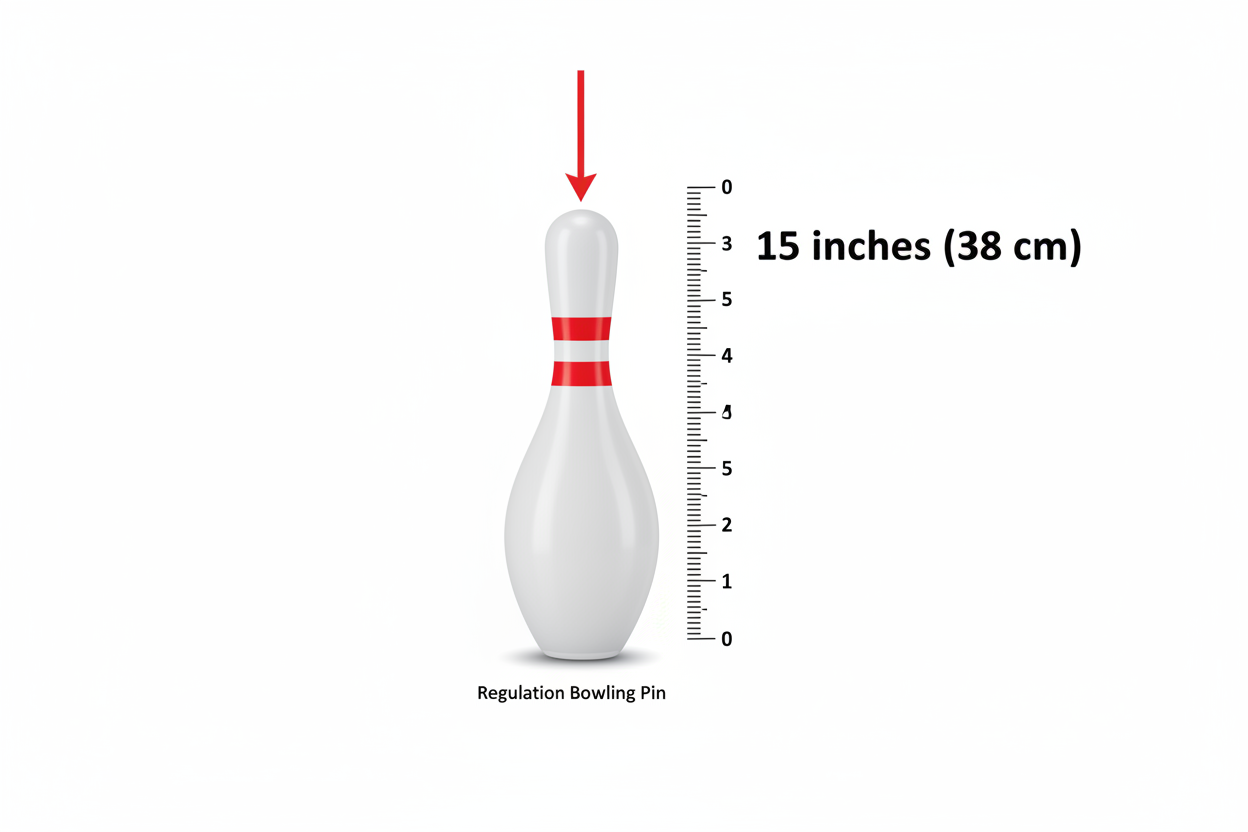
A regulation bowling pin stands exactly 15 inches tall, as specified by the United States Bowling Congress (USBC) which governs standardized bowling equipment in North America. This height measurement extends from the pin's flat base to the top of its rounded crown, maintaining strict tolerances of ±0.03125 inches (about 1/32 inch) to ensure consistency across all sanctioned bowling. The 15-inch standard has remained unchanged since early 20th-century standardization efforts, creating the familiar pin dimensions that define modern tenpin bowling. Combined with weight specifications of 3 pounds 6 ounces to 3 pounds 10 ounces, the 15-inch height creates the precise geometry necessary for proper ball-pin interaction that produces the chain reaction pin scatter essential to bowling's gameplay.

Regulation bowling pins measure 15 inches tall with maximum diameter of 4.766 inches at the widest point, creating the distinctive bottle shape recognized worldwide. The pin tapers from its wide "belly" section through a narrower "neck" before expanding slightly to the rounded crown at the top. The base measures 2.030 inches in diameter, providing the stable foundation that allows pins to stand upright while remaining vulnerable to impact forces.
These precise dimensions result from over a century of refinement aimed at creating pins that fall predictably when struck properly while resisting deflection from glancing hits. The 15-inch height balances between being tall enough to create dramatic pin action and short enough to prevent excessive wobbling that would create inconsistent results. The width-to-height ratio creates optimal energy transfer characteristics when struck by regulation bowling balls traveling at typical speeds.
The USBC specifications include detailed measurements for every pin dimension: belly diameter, neck diameter, crown radius, base width, and center of gravity location. These specifications ensure pins manufactured by different companies perform identically, preventing competitive advantages or disadvantages based on equipment variations. Bowlers wearing custom bowling jerseys in sanctioned competition rely on these standardized specifications for fair, consistent gameplay.
|
Dimension |
Measurement |
Tolerance |
Purpose |
|
Total height |
15 inches |
±1/32 inch |
Standard pin height |
|
Maximum diameter |
4.766 inches |
±0.008 inches |
Belly width |
|
Base diameter |
2.030 inches |
±0.005 inches |
Stability foundation |
|
Weight |
3 lbs 6 oz - 3 lbs 10 oz |
4 oz range |
Consistent mass |
|
Center of gravity |
9.9 inches from base |
±0.250 inches |
Balance point |
Modern bowling pins use wood cores (traditionally hard rock maple) covered with durable plastic coating that protects against repeated impacts while maintaining proper weight and balance. The wooden core provides density and structural integrity, while the plastic coating creates smooth, consistent surface characteristics that withstand thousands of impacts from bowling balls and other pins without degrading performance.
Hard rock maple remains the preferred core material due to its exceptional density (approximately 44-47 pounds per cubic foot) and impact resistance. Manufacturers laminate multiple maple blocks together, creating pins from 12-15 separate pieces glued into a single unit. This lamination process distributes stress more evenly than solid wood construction, preventing splitting or cracking from repeated impacts. The grain orientation alternates between layers, further enhancing structural stability.
Some modern pins use synthetic cores from phenolic resin or other composite materials that provide consistent density and durability. These synthetic cores eliminate natural wood variations that can cause subtle performance differences between pins. However, many bowlers and facilities prefer traditional maple construction for its proven performance characteristics and authentic feel. Professional bowlers in Storm bowling jerseys typically encounter various pin constructions across different tournaments and bowling centers.

The plastic coating typically consists of Surlyn or similar proprietary materials applied over the wood core in multiple layers. This coating must be durable enough to withstand impacts from 14-16 pound bowling balls traveling 15-20 mph, plus collisions with other pins during chain reactions. The coating maintains consistent thickness across the entire pin surface, ensuring weight distribution remains within specifications.
Coatings affect pin action subtly through friction characteristics—slightly more "grippy" coatings may deflect differently than smoother alternatives when struck. However, USBC specifications limit how much coating characteristics can vary, preventing dramatic performance differences. The coating also provides the surface where decorative graphics and pin numbers appear, creating the visual distinction between different pin positions. Understanding what targets are in bowling helps contextualize pin positioning and numbering systems.
Regulation pins must weigh between 3 pounds 6 ounces (1,531 grams) and 3 pounds 10 ounces (1,644 grams), providing a 4-ounce tolerance range. This relatively tight specification ensures pins respond similarly to impacts, creating consistent pin action across different pin sets and bowling centers. Heavier pins within the legal range may carry slightly better when hit firmly but could also deflect bowling balls more on light hits, while lighter pins might scatter more easily but offer less resistance to deflection.
The pin's center of gravity must sit between 9.65 and 10.15 inches from the base, creating the balance characteristics that determine how pins topple when struck. This center of gravity location, combined with the 2.030-inch base diameter, creates a ratio that makes pins relatively unstable—they tip easily when impacted but remain standing when undisturbed. Lowering the center of gravity would make pins harder to knock down, while raising it would make them tip too easily from vibrations or air currents.
The center of gravity specification affects pin "carry" characteristics—how effectively pins knocked by the ball scatter to topple remaining pins. Properly balanced pins create the chain reaction mixing necessary for consistent strikes, while pins with off-specification centers of gravity might "die" on impact or deflect unpredictably. Manufacturers carefully control wood density and coating thickness distribution to maintain proper center of gravity positioning. Competitive bowlers in Hammer bowling jerseys or Motiv bowling jerseys depend on consistent pin specifications for fair competition. Equipment like the Hammer Black Widow Mania bowling jersey performs optimally when pins meet exact specifications.

The 15-inch height emerged through early 20th-century standardization efforts that tested various dimensions to find optimal gameplay characteristics. Prior to standardization, pins varied considerably in height, weight, and shape across different regions and bowling establishments. The American Bowling Congress (ABC, predecessor to USBC) conducted extensive testing in the early 1900s to determine specifications that created the best balance between difficulty and achievability.
The 15-inch height creates pins tall enough to be clearly visible from the approach area (60 feet away) while remaining short enough that bowling balls don't routinely pass underneath without contact. Taller pins would create different ball-pin impact angles that might produce less dramatic pin action, while shorter pins would be harder to see and might not scatter as effectively when struck. The height also relates mathematically to ball diameter (8.5 inches) in ways that optimize strike pocket geometry.
Historical pins sometimes stood 16-18 inches tall in certain regional variations, but these taller pins created gameplay considered too easy or predictable. The 15-inch standard struck the balance that has endured for over a century with only minor refinements to other specifications like weight and coating materials. Understanding bowling's history provides context for how equipment standards evolved.
While tenpin bowling uses 15-inch pins, other bowling variations feature different pin dimensions suited to their gameplay characteristics. These variations demonstrate how pin height significantly affects bowling difficulty and style.
Duckpin bowling uses pins measuring only 9.4 inches tall—37% shorter than regulation bowling pins. These shorter, squatter pins combined with smaller balls (3.75 pounds, no finger holes) create significantly more difficult gameplay where strikes occur far less frequently. The reduced height and different proportions produce less dramatic pin action, requiring more precision than tenpin bowling. Understanding what is duckpin bowling provides complete context for this regional variation.
Candlepin bowling features the tallest pins at 15.75 inches—slightly taller than tenpin pins but much thinner at only 2.9 inches maximum diameter. These tall, thin pins resemble candles (hence the name) and combine with small balls (under 3 pounds) to create extraordinarily difficult gameplay. The height-to-width ratio makes candlepin pins easier to tip over individually but harder to create chain reactions that knock multiple pins simultaneously.
Five-pin bowling, popular in Canada, uses pins similar in height to tenpin pins but thinner profile and arranged in a V-formation rather than triangular pattern. The similar height maintains visibility and aesthetic familiarity while the reduced pin count and different arrangement create distinct strategic gameplay.

The ten pins arrange in an equilateral triangle pattern with 12 inches measured center-to-center between adjacent pins. This 12-inch spacing creates precise gaps where bowling balls can travel between pins when hit at certain angles, producing the strategic complexity that defines bowling. The headpin (pin 1) sits 60 feet from the foul line, creating the approach distance that allows balls to develop their hook motion before impact.
Pin numbering follows a standardized pattern with pin 1 at the front, pins 2 and 3 behind it, pins 4-5-6 in the third row, and pins 7-8-9-10 forming the back row. This numbering system allows bowlers to communicate precisely about pin leaves, spare shooting strategies, and ball reaction analysis. The 15-inch pin height combined with 12-inch spacing creates specific sight lines and angles that experienced bowlers use for targeting and adjustment strategies.
Automatic pinsetters pick up and replace pins in exact positions each frame, maintaining the 12-inch spacing within extremely tight tolerances. Even slight spacing variations would affect ball deflection angles and pin carry characteristics, potentially creating unfair advantages or disadvantages across different lanes. The combination of consistent pin height, weight, and positioning creates the standardized environment necessary for fair competition and skill development. Professional bowlers in Roto Grip bowling jerseys or 900 Global bowling jerseys rely on precise pin positioning for consistent shot execution.
Bowling pins endure extraordinary stress during normal use—each pin experiences thousands of impacts from bowling balls and other pins throughout its lifespan. High-volume bowling centers might need to replace pin sets every 12-24 months depending on usage levels and maintenance practices, while lower-volume facilities might get 2-3 years from properly maintained pins.
Pins show wear through several indicators: coating cracks or chips, visible dents, weight loss from material removal, and balance changes affecting how they fall. Severely worn pins might not meet USBC specifications for weight or balance, creating inconsistent pin action that affects gameplay fairness. Bowling centers performing regular maintenance inspect pins periodically, retiring those showing excessive wear or damage.
Weight loss occurs gradually as coating material chips away and wood fibers compress from repeated impacts. A pin that initially weighed 3 pounds 8 ounces might drop to 3 pounds 5 ounces after extensive use, falling below the 3 pounds 6 ounces minimum specification. Similarly, coating damage can shift center of gravity outside acceptable ranges, creating pins that topple or stand differently than properly specified pins.
Quality bowling centers maintain full sets of backup pins, rotating between sets to distribute wear evenly and ensure sanctioned competition always uses specification-compliant equipment. Tournament bowlers expect pristine pin conditions, while recreational centers might tolerate slightly more wear since casual bowlers typically don't notice subtle pin action differences. Understanding perfect game scoring emphasizes how pin consistency affects strike potential.

The 15-inch height creates specific physics governing pin action when struck by bowling balls. The impact occurs roughly 10 inches above the lane surface as the ball contacts the pin at belly height, transferring momentum that causes the pin to rotate backward and sideways simultaneously. This complex motion creates the pin's trajectory as it falls and potentially collides with other standing pins.
Pin-to-pin collisions create the chain reaction "mixing" that separates strikes from single-pin hits. The 15-inch height provides sufficient mass distribution that pins carry meaningful momentum when knocked into other pins, creating secondary collisions that topple additional pins. Shorter pins might not transfer enough energy for effective chain reactions, while taller pins might tip too easily without transferring sufficient momentum to create mixing.
The height also affects the "messenger" pin phenomenon where a pin flies across the deck to knock down a distant pin that wasn't contacted by the ball directly. The 15-inch height combined with proper weight allows pins to travel 10-15 feet horizontally while airborne after being struck, creating the messengers that convert marginal pocket hits into strikes. This dynamic pin action creates much of bowling's excitement and rewards properly executed shots that might otherwise leave pins standing. Professional bowlers in Brunswick bowling jerseys, Radical bowling jerseys, or Track bowling jerseys study pin action physics extensively to optimize their ball motion for maximum strike potential.

The 15-inch height provides sufficient surface area for distinctive visual elements including lane numbering, pin position numbers, manufacturer logos, and decorative graphics. Most pins feature red stripes or bands near the neck area, creating the classic bowling pin appearance recognized globally. These visual elements serve practical purposes—pin numbers help bowlers and scoring systems identify which pins remain standing, while distinctive graphics help bowling centers identify their pin inventory.
Cosmic bowling environments sometimes use pins with special finishes that glow under blacklight, creating dramatic visual effects. These specialty pins must still meet the 15-inch height and other USBC specifications to maintain proper gameplay characteristics. The coating materials that create glowing effects cannot compromise pin durability or balance, requiring careful engineering to achieve both aesthetic and performance goals.
A regulation bowling pin stands exactly 15 inches tall according to USBC specifications, with this precise height maintained within 1/32 inch tolerance to ensure consistent gameplay across all sanctioned bowling. This standardized height combines with 3 pounds 6 ounces to 3 pounds 10 ounces weight specifications and strict balance requirements to create pins that deliver predictable, fair performance when struck by regulation bowling balls. The 15-inch standard emerged through early 20th-century testing that identified optimal dimensions for balancing bowling difficulty with achievability, creating the engaging gameplay that has endured for over a century. By maintaining these precise specifications through quality materials including hard rock maple cores and durable plastic coatings, combined with careful manufacturing processes that control weight distribution and center of gravity positioning, bowling pins provide the consistent equipment foundation necessary for skill development, fair competition, and enjoyable recreational play. Visit EFX to discover premium bowling apparel that complements your understanding of bowling's precisely engineered equipment specifications.
United States Bowling Congress. (2024). Equipment specifications for bowling pins. USBC Rule Book, Chapter 5, Section B.
Bowling Pin Manufacturers Association. (2024). Pin construction standards and materials. BPMA Technical Guidelines, 15(2), 34-52.
Professional Bowlers Association. (2024). Pin specifications and their impact on professional competition. PBA Equipment Manual, Section 6.
Miller, R. (2023). The physics of bowling pin design and standardization history. Journal of Bowling Science, 30(4), 178-196.