
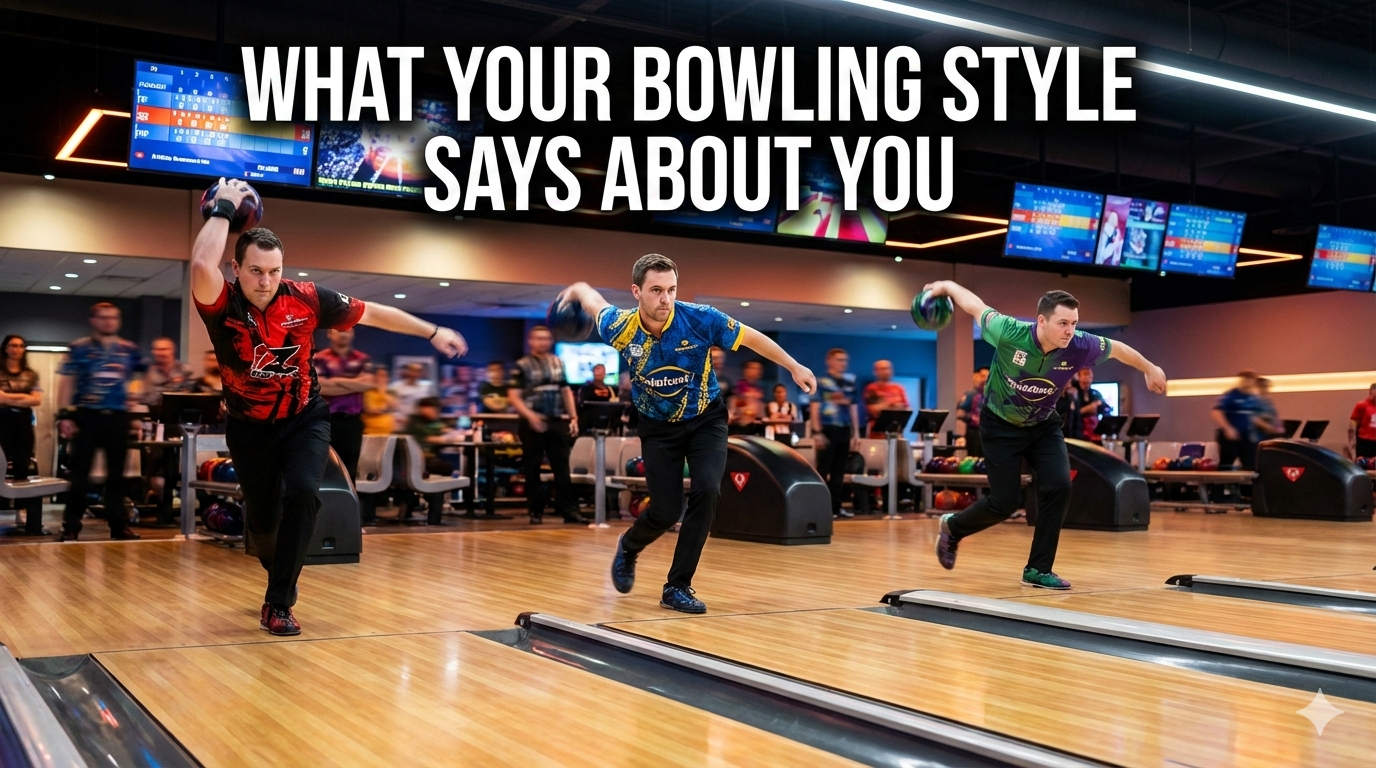

Bowling style is more than a mechanical preference. It is a visible expression of how a player thinks, prepares, adapts, and competes. Every approach, release, and ball motion reflects decisions made under pressure, revealing patterns of discipline, confidence, and strategic mindset.
For competitive bowlers and organized teams, understanding bowling style creates clarity. It improves performance alignment, equipment decisions, and even how athletes present themselves visually on the lanes. In modern bowling culture, style functions as both a performance framework and an identity marker.
What Is a Bowling Style?
Bowling style refers to the combined mechanics and strategic behaviors a bowler uses to deliver the ball consistently and score effectively. This includes physical execution as well as lane-reading and adjustment habits developed through repetition and experience.
From a technical standpoint, bowling style integrates grip, approach tempo, release type, ball speed, rev rate, axis rotation, and targeting strategy. These elements work together as a system rather than isolated techniques. A bowler’s style remains relatively stable even as individual skills improve.
It is important to separate style from technique. Technique describes how well a movement is executed. Style describes the overall delivery profile and strategic intent behind those movements. This distinction becomes critical when evaluating performance or building a cohesive team lineup.
Understanding this foundation leads directly into why bowling style reflects deeper psychological traits.

What Is a Bowling Style?
Why Bowling Style Reflects Personality and Mindset
Bowling style mirrors how a player processes information and responds to uncertainty. Each style reflects decision-making preferences, tolerance for risk, and emotional regulation under competitive stress.
Control-oriented styles often indicate patience and discipline. High-rev or aggressive styles tend to reflect confidence, assertiveness, and comfort with dynamic environments. Adaptable styles reveal problem-solving tendencies and strategic flexibility across lane conditions.
From a competitive psychology perspective, bowling forces repeated decision loops. Players choose angles, surfaces, and adjustments every frame. Over time, these choices consolidate into a recognizable style that aligns with the bowler’s mindset rather than conscious intent.
This psychological alignment explains why styles feel natural to players and resistant to forced change. It also sets the stage for the six primary competitive bowling styles.
What Are the Main Types of Bowling Styles?
Competitive bowling recognizes six primary styles based on ball motion, rev dominance, and release mechanics. Each style creates distinct shapes downlane and serves different strategic roles in team and tournament environments.
The following sections break down each style individually, focusing on performance behavior rather than stereotypes.
The Power Bowler
The power bowling style indicates confidence in creating strong ball motion through speed and revolutions. Power bowlers generate higher-than-average rev rates while maintaining competitive ball speed, producing heavy backend reaction.
This style thrives on medium to heavier oil patterns where entry angle becomes critical. Power bowlers often excel at opening the lane and carrying corner pins through continuation rather than precision alone.
Strategically, this style reflects assertiveness and willingness to play deeper lines. Power bowlers rely on trust in motion and commit fully to aggressive adjustments when lanes transition.
The Stroker
The stroker style reflects control, efficiency, and repeatability. Strokers use moderate speed and lower rev rates to create smooth, predictable ball motion with minimal deviation.
This style performs best on flatter or sport patterns where accuracy and pocket control outweigh raw power. Strokers often maintain consistent scoring by minimizing splits and managing transition carefully.
From a mindset perspective, this style aligns with discipline and patience. Strokers prioritize precision over reaction, making them stabilizing anchors in team lineups.
The Tweener
The tweener style represents balance and adaptability. Tweeners sit between stroker and power profiles, blending moderate rev rates with controlled speed to create versatile ball motion.
This style adjusts well across varied lane conditions and formats. Tweeners can chase oil, adjust angles, and change surfaces without drastic mechanical shifts.
Psychologically, the tweener style reflects flexibility and situational awareness. These bowlers read environments quickly and make measured adjustments rather than extreme changes.
The Cranker
The cranker style emphasizes maximum revolutions and sharp backend motion. Crankers generate high axis rotation and rev dominance, creating explosive entry angles.
This style excels on higher-volume patterns where friction management becomes critical. Crankers often shape the lane aggressively and rely on continuation to strike.
From a behavioral standpoint, crankers exhibit high confidence and competitive intensity. The style rewards commitment and precision timing but demands physical consistency.
The Straight Bowler
The straight bowling style prioritizes simplicity and direct targeting. Straight bowlers minimize hook by using lower rev rates and end-over-end roll.
This style performs best on dry conditions or for spare shooting consistency. Straight bowlers often rely on accuracy and repeatability rather than lane manipulation.
Mentally, this style reflects efficiency and clarity. Straight bowlers reduce variables and focus on execution rather than complex adjustments.
The Two-Handed Bowler
The two-handed style removes the thumb from the release, allowing increased leverage and rev generation. This style creates high rotation and dynamic motion with lower ball speed.
Two-handed bowling thrives on modern lane conditions and advanced equipment. The style allows aggressive angles while maintaining control through rev dominance.
This approach reflects innovation and physical adaptability. Two-handed bowlers often embrace experimentation and rapid adjustment cycles.
Each style directly influences how players choose equipment.
What Are the Main Types of Bowling Styles?
How Bowling Style Influences Equipment Choices
Bowling equipment must match the bowler’s delivery profile to perform correctly. Style determines whether a bowler is speed-dominant, rev-dominant, or balanced, which affects ball motion and carry.
Mismatch between style and equipment often causes overreaction or weak backend motion. Proper alignment improves consistency and reduces physical strain over long sessions.
Bowling Balls by Style
Power and cranker styles benefit from stronger core asymmetry and solid or hybrid covers. Strokers perform best with smoother symmetrical cores and controlled surfaces. Tweeners require versatile shapes that respond predictably across conditions. Straight bowlers favor polyester or low-differential reactive balls. Two-handed bowlers typically use stronger covers with adjusted layouts.
Layouts, Surfaces, and Lane Conditions
Layouts must match axis rotation and tilt. Surface preparation controls friction response. Lane conditions determine whether early roll or backend recovery is required.
Equipment selection becomes strategic when style is clearly defined, leading naturally into apparel considerations.
How Bowling Style Influences Jersey and Apparel Design
Bowling apparel influences both performance and perception. Different bowling styles place different physical demands on the body, which directly affects how jerseys should be designed, fitted, and worn during competition.
Power bowlers and crankers require unrestricted shoulder rotation and torso freedom to support higher rev rates and aggressive launch angles. Jerseys designed for these styles often feature athletic cuts and bold visual patterns that reinforce confidence and presence on the lanes. This is why aggressive designs such as the Blaves Bowling Jersey naturally align with power-driven styles that rely on momentum, visual dominance, and assertive lane play.
Strokers and straight bowlers place greater emphasis on balance, timing, and repeatability. Their apparel priorities lean toward lightweight fabrics, stable fits, and visually clean designs that reflect discipline and control. Jerseys inspired by classic performance aesthetics, such as theHammer Black Pearl Urethane Bowling Jersey, mirror this mindset by projecting calm confidence rather than aggressive motion.
Modern tweener and two-handed bowlers often sit between these extremes. Their styles demand adaptability, endurance, and comfort across long competitive blocks. Apparel for these bowlers benefits from breathable materials and contemporary design language that reflects modern competitive bowling. Pro-inspired jerseys like the Darren Tang 2023 Strikes Pink & Blue Bowling Jersey connect performance identity with professional credibility, reinforcing both individuality and competitive intent.
Across all styles, sublimated bowling jerseys allow athletes and teams to express identity without sacrificing performance. When apparel aligns with bowling style, visual presentation becomes an extension of a competitive mindset rather than a distraction.
This alignment between style, performance, and presentation reinforces the need to understand bowling style holistically rather than mechanically.

Hammer Black Pearl Urethane Bowling Jersey
Can Your Bowling Style Change Over Time?
Bowling style evolves as skill, strength, and experience change. Players may gain rev rate, adjust speed, or modify releases as they encounter new conditions and formats.
Physical development, coaching input, and equipment innovation all contribute to gradual shifts. However, core tendencies often remain recognizable.
Intentional style change requires structured training and realistic expectations. Most improvements refine an existing style rather than replace it entirely.
How to Identify Your Bowling Style Accurately
Accurate style identification relies on observable metrics rather than assumptions. Ball speed, rev rate, axis rotation, and track flare provide objective indicators.
Video analysis reveals release mechanics and timing. Coaching feedback adds external validation. League and tournament performance across conditions confirms consistency.
Understanding one’s style allows targeted improvement rather than generalized advice.
Why Understanding Bowling Style Improves Team Chemistry
Teams perform better when roles align with styles. Balanced lineups cover multiple zones of the lane and manage transition effectively.
Style awareness improves communication, reduces overlap, and clarifies strategy. Coordinated visual identity through consistent apparel further reinforces cohesion and professionalism.
Teams that understand style function operate with greater trust and efficiency.
Conclusion: Bowling Style as Identity, Not Limitation
Bowling style defines expression, not ceilings. It reflects how a player approaches competition while leaving room for growth and adaptation.
When style, equipment, and presentation align, bowlers perform with confidence and clarity. Understanding style transforms bowling from repetition into intentional performance.
Frequently Asked Questions
Is one bowling style better than others?
No style is universally superior. Effectiveness depends on lane conditions, equipment matching, and execution.
Do professional bowlers stick to one style?
Professionals maintain a core style while adapting angles, speed, and surfaces as needed.
Does bowling style affect injury risk?
Yes. Improper equipment or mechanics relative to style can increase strain over time.
Can apparel impact bowling performance?
Proper fit and breathable fabrics support movement consistency and comfort during competition.
How does bowling style affect lane reading?
Style determines how a bowler interprets oil patterns and chooses adjustments.