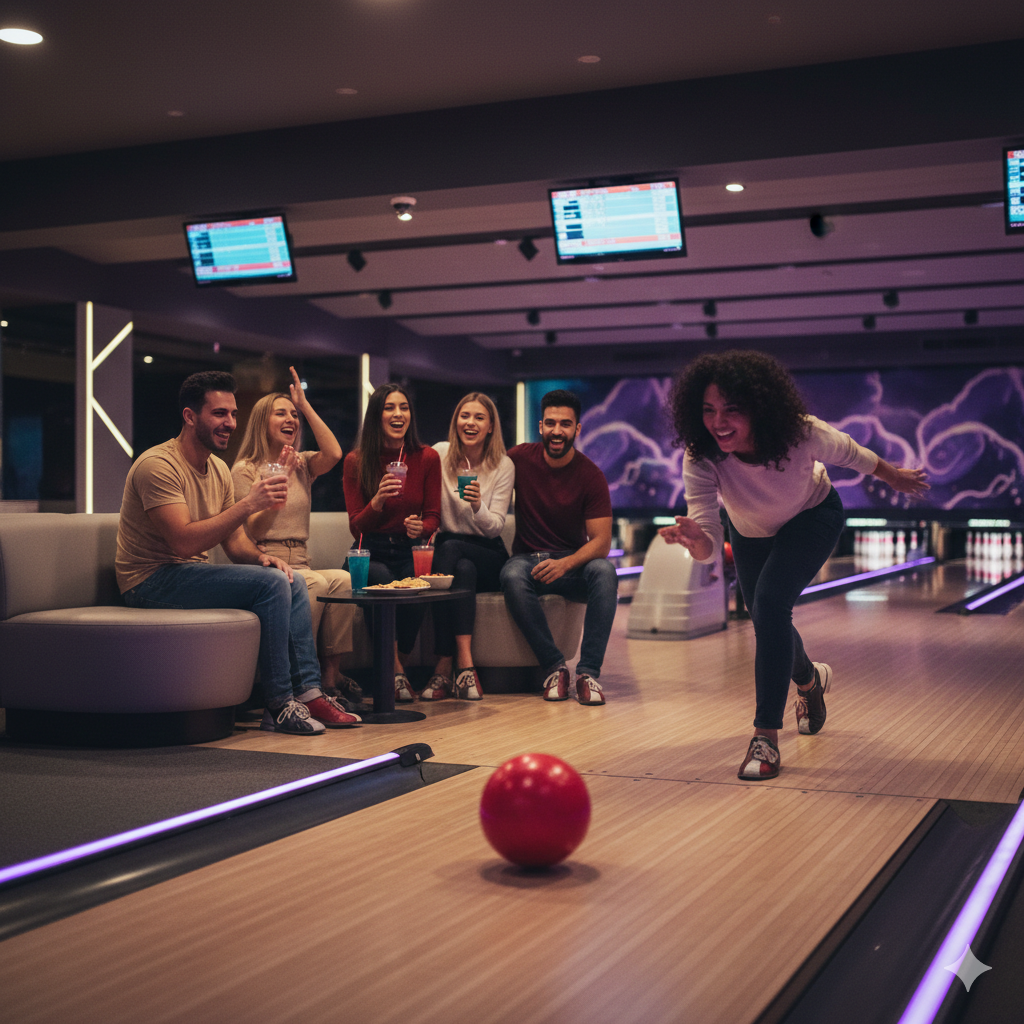

Most bowling lanes can accommodate 5-6 people comfortably for a single game, though the maximum capacity varies by bowling center. While some centers allow up to 8 people per lane, groups larger than 6 often experience longer wait times between turns and extended game duration. Understanding optimal lane capacity helps you plan better bowling outings whether for casual recreation, birthday parties, or competitive league play.
Bowling lane capacity depends on several factors including alley policies, scoring system capabilities, and seating availability. Most modern bowling centers set their maximum at 6 people per lane to maintain game flow and customer satisfaction.
The physical space around a bowling lane typically includes a scoring area with seating for 4-6 people, ball return systems, and approach areas. Modern electronic scoring systems can register up to 8 players per lane, though this doesn't always mean it's comfortable or practical. The seating arrangement usually features bench-style or individual chairs positioned behind the ball return, with additional standing room for larger groups.
Bowling center policies vary based on their target market and facility design. Family entertainment centers might encourage larger groups of 7-8 people per lane to accommodate birthday parties and family outings. League bowling centers often limit lanes to 5-6 bowlers to maintain competitive pace. High-end boutique bowling lounges may restrict capacity to 4-5 people per lane to enhance the premium experience and reduce wait times.
|
Lane Configuration |
Typical Capacity |
Seating Type |
Best For |
|
Standard center lane |
5-6 people |
Bench seating |
Casual bowling, leagues |
|
Family entertainment lane |
6-8 people |
Mixed seating |
Parties, large groups |
|
Boutique bowling lounge |
4-5 people |
Premium seating |
Date nights, upscale events |
|
Tournament lane |
5 people |
Individual chairs |
Competitive bowling |
The optimal number of people per lane changes based on your bowling purpose and desired experience. Matching group size to your situation ensures everyone has fun without excessive downtime.
For casual bowling outings, 4-5 people per lane provides the best balance between social interaction and game pace. This size allows everyone to bowl frequently enough to stay engaged while providing time for conversation between turns. Games typically last 60-90 minutes with this group size, making it perfect for evening entertainment or weekend activities. Many bowlers in custom bowling jerseys prefer this size for maintaining both social atmosphere and bowling rhythm.
Family bowling works well with 5-6 people per lane, especially when including younger children who bowl more slowly. This configuration accommodates parents, kids, and perhaps grandparents while keeping the experience manageable. Consider that young children may need bumpers and lighter balls, which can extend game time. Most families find that 6 people per lane allows everyone to participate without feeling rushed.
Birthday parties and celebrations often push lane capacity to 6-8 people, though splitting into multiple lanes works better for groups larger than 6. When you have 8 people on one lane, each person might wait 15-20 minutes between turns, which can reduce engagement, especially for children. For parties of 10-12 people, reserving two adjacent lanes creates a better experience while maintaining group cohesion. Many centers offer party packages that include multiple lanes, food service, and dedicated party hosts.
League bowling typically uses 4-5 people per lane to maintain competitive pace and allow proper concentration. Most bowling leagues follow a format where teams of 3-5 bowlers compete, with each person bowling three games in a session. This configuration ensures games finish within the allotted time slot and allows bowlers to maintain focus. Competitive bowlers wearing Storm bowling jerseys understand that smaller group sizes improve practice quality and competitive performance.
|
Group Purpose |
Recommended Size |
Games Per Session |
Estimated Time |
|
Casual friends |
4-5 people |
2-3 games |
90-120 minutes |
|
Family outing |
5-6 people |
1-2 games |
75-120 minutes |
|
Birthday party |
6-8 people |
1-2 games |
90-150 minutes |
|
League bowling |
4-5 people |
3 games |
120-150 minutes |
|
Date night |
2 people |
2-3 games |
60-90 minutes |
The number of people bowling on one lane directly impacts how long each game takes, which affects overall enjoyment and center operations. Understanding these time implications helps you plan your bowling session appropriately.
A single frame for one person takes approximately 1-2 minutes when factoring in approach time, ball retrieval, and pin reset. With this baseline, a complete 10-frame game for one person takes 10-20 minutes depending on skill level and pace. Multiply this by the number of bowlers to estimate total game duration. A group of 4 bowlers completing one game takes 40-80 minutes, while 8 bowlers on the same lane might need 80-160 minutes for a single game.
These calculations assume continuous play without extended breaks. Real-world game times often run longer due to food orders, bathroom breaks, phone distractions, and social conversation. Bowlers should add 20-30% to basic time estimates for casual sessions. Centers that serve food and beverages directly to lanes typically see longer game times as people eat between frames.
When lanes have 6-8 people, individual bowlers might wait 10-20 minutes between their turns, which can lead to disengagement, especially for children and less experienced bowlers. Longer wait times also make it harder for bowlers to maintain rhythm and consistency in their approach. Reading about bowling tips for beginners can help newer bowlers stay engaged during longer waits.
Strategies for managing larger groups include splitting into two lanes when possible, implementing speed bowling rules for casual games, and encouraging social interaction during wait times. Some bowlers bring card games or other activities to occupy downtime, though this can further extend game duration. Professional bowlers wearing Hammer bowling jerseys emphasize that consistent practice requires reasonable wait times to maintain muscle memory and mental focus.
|
Number of Bowlers |
Minutes Per Frame |
Full Game Duration |
Wait Time Per Turn |
|
2 people |
2-4 minutes |
20-40 minutes |
1-2 minutes |
|
4 people |
4-8 minutes |
40-80 minutes |
3-6 minutes |
|
6 people |
6-12 minutes |
60-120 minutes |
5-10 minutes |
|
8 people |
8-16 minutes |
80-160 minutes |
7-14 minutes |
Different bowling centers implement varying policies regarding lane capacity based on their business model, target audience, and facility capabilities. Understanding these policies helps you choose the right venue for your group size.
Most bowling centers establish maximum capacity limits for safety, comfort, and operational efficiency. Standard centers typically cap lanes at 6 people, while family entertainment centers might allow 8 people during peak party times. These limits ensure adequate seating, manageable game duration, and reasonable revenue per lane hour. Some upscale bowling lounges limit capacity to 4-5 people to maintain their premium atmosphere and service levels.
Centers enforce these limits through their reservation systems and front desk policies. When you book online or call ahead, the system won't allow you to exceed the stated maximum. Walk-in groups that exceed capacity are usually asked to split across multiple lanes or wait for additional lanes to become available. During busy periods like weekend evenings, centers may enforce stricter capacity limits to maximize lane turnover and accommodate more customers.
During peak hours (typically Friday and Saturday evenings), bowling centers often implement stricter capacity limits and shorter time blocks per reservation. A lane that might accommodate 8 people during slow Tuesday afternoons might be limited to 6 people on Saturday night. This policy ensures more groups can bowl during high-demand periods and prevents single groups from monopolizing lanes for 3-4 hours.
Special events like cosmic bowling, holiday parties, and tournament weekends may have different capacity rules. Some centers offer unlimited bowling during cosmic bowling sessions, which makes larger groups more practical since the focus shifts from competitive play to social entertainment. Corporate events and private parties can often negotiate custom capacity arrangements by renting multiple lanes or the entire facility. Teams wearing matching pro-designed bowling jerseys for corporate events often reserve multiple lanes to accommodate larger groups while maintaining reasonable game pace.

Properly planning your lane reservations ensures everyone in your group has an enjoyable bowling experience without frustration from overcrowding or unnecessary expense from booking too many lanes.
The general rule for determining lane needs is to divide your total group size by 5 and round up. A group of 12 people should book 3 lanes (12 ÷ 5 = 2.4, rounded to 3). This formula provides comfortable spacing while keeping the group close enough to interact. For groups focused more on competition than socializing, use a divisor of 4 instead of 5 to ensure faster game pace.
Consider the composition of your group when calculating lane needs. A group of 8 adults who bowl regularly can comfortably share one lane, while 8 children at a birthday party should probably split across 2 lanes to maintain engagement and prevent restlessness. Mixed groups with varying skill levels benefit from more lanes because experienced bowlers become frustrated waiting for beginners to complete their turns.
For groups larger than 10 people, book multiple adjacent lanes to maintain group cohesion while ensuring reasonable game flow. Request lanes in the same section of the bowling center so groups can interact between lanes. Some centers designate specific areas for parties and large groups, often near food service or party rooms for convenient access to amenities.
Make reservations well in advance for weekend bowling or during peak seasons. Popular centers book up days or weeks ahead, especially for prime evening time slots. Specify your exact group size when booking to ensure the center can accommodate your needs with appropriate seating and equipment. Many centers offer party packages that include multiple lanes, shoe rentals, food service, and dedicated hosting, which simplifies planning for large group events.
|
Total Group Size |
Recommended Lanes |
People Per Lane |
Best Configuration |
|
4-5 people |
1 lane |
4-5 |
Single lane setup |
|
6-10 people |
2 lanes |
3-5 each |
Adjacent lanes |
|
11-15 people |
3 lanes |
4-5 each |
Consecutive lanes |
|
16-20 people |
4 lanes |
4-5 each |
Two pairs of adjacent lanes |
|
20+ people |
5+ lanes |
4-5 each |
Section reservation |
When your group includes children or bowling beginners, capacity considerations change because these bowlers typically take longer per turn and may need additional assistance.
Young children (ages 3-8) take significantly longer to bowl than adults, often requiring 3-5 minutes per frame instead of 1-2 minutes. They need help selecting appropriate ball weights, may require ramp assistance for very young children, and often need guidance on approach and release. When calculating ideal lane capacity for groups with multiple young children, reduce the standard 5-6 person recommendation to 4-5 people per lane.
Bowling centers typically provide bumpers for young children to prevent gutter balls and maintain interest. While bumpers help with scoring, they don't necessarily speed up play since children still take time with their approach. Some centers offer lightweight bowling balls (6-8 pounds) and specialized ramps that help children who can't swing a ball properly. Groups with many young children should expect significantly longer game times regardless of lane capacity.
Mixed-skill groups present unique challenges for lane capacity planning. Experienced bowlers maintain consistent pace and rhythm, while beginners often take longer as they learn proper form and strategy. A lane with 6 people where 3 are experienced and 3 are complete beginners will play slower than a lane with 6 intermediate bowlers of similar skill levels. Bowlers wearing Motiv bowling jerseys who take the sport seriously may become frustrated in mixed-skill environments with extended wait times.
Consider splitting groups by skill level when booking multiple lanes. Put experienced bowlers on one lane and beginners on another, allowing each group to bowl at their natural pace. This separation also reduces pressure on beginners who might feel rushed by more skilled bowlers waiting for their turns. Alternatively, pair one experienced bowler with several beginners on each lane to provide coaching and maintain reasonable pace through gentle guidance.
Regardless of how many people bowl on your lane, certain strategies help maximize enjoyment and maintain engagement throughout your session.
Creating friendly competitions works well for groups of 4-6 people on one lane. Implement team formats where people pair up and combine scores, or create individual challenges like highest single-frame score or most spares. These competitions maintain interest during wait times and add excitement beyond just knocking down pins. Many recreational bowlers find that light competition enhances the social experience without creating serious pressure.
Encourage social interaction between frames to make wait times feel shorter and more enjoyable. Share stories, celebrate good shots, and offer encouragement after splits or gutter balls. Groups that focus solely on bowling scores often find the experience more stressful, while those who prioritize social bonding enjoy themselves regardless of their bowling performance. Taking group photos throughout the session creates lasting memories and provides breaks from continuous bowling.
Consider ordering food and beverages that arrive between games rather than during active play. Most bowling centers offer lane-side food service, but eating during a game extends duration significantly. Ordering appetizers or pizza between the first and second games gives everyone a break, allows for socializing, and resets energy levels for another round. Understanding what makes a good bowling experience helps groups of all sizes enjoy their time at the lanes.

When your group exceeds comfortable lane capacity, several alternative arrangements can improve the experience beyond simply cramming everyone onto available lanes.
For very large groups (15+ people), consider tournament-style rotation formats where not everyone bowls simultaneously. Create brackets where winners advance or implement round-robin formats where small teams rotate between lanes. This approach works particularly well for corporate events or large family reunions where the social aspect matters more than everyone bowling every frame.
Another rotation strategy involves having some group members bowl while others engage in other entertainment center activities like arcade games, billiards, or food areas. Rotate groups every 30-45 minutes so everyone gets lane time without the frustration of 8-10 people crowded around a single lane. This approach works especially well at family entertainment centers that offer diverse activities beyond just bowling.
For groups of 20+ people, consider renting a private party room or even buying out an entire bowling center for exclusive use. Many centers offer these options during off-peak hours (weekday mornings or afternoons) at reasonable rates. Private events eliminate capacity concerns, allow custom game formats, and provide dedicated staff support for your group. Companies hosting team-building events often choose this option, with participants wearing matching character bowling jerseys to enhance team spirit.
Private events also allow for customized experiences like costume themes, specialized scoring rules, or integration with other activities like karaoke or trivia contests between bowling rounds. The flexibility of private events makes them ideal for milestone celebrations like milestone birthdays, anniversaries, or company achievement recognition where the bowling experience should feel unique and memorable.
Determining how many people should bowl in one lane depends on your priorities, group composition, and bowling purpose. While most lanes can technically accommodate 6-8 people, the optimal experience typically occurs with 4-5 bowlers per lane for casual outings and competitive sessions. Larger groups should consider splitting across multiple adjacent lanes to maintain game pace and engagement while preserving social cohesion. By matching your lane booking strategy to your specific situation, you ensure everyone enjoys their bowling experience without frustration from overcrowding or excessive wait times. Visit EFX to find premium bowling apparel that helps your entire group look coordinated and professional on the lanes, regardless of your group size.
Bowling Proprietors' Association of America. (2024). Lane capacity and customer experience guidelines. BPAA Operations Manual.
International Bowling Campus. (2024). Facility design standards for modern bowling centers. Bowling Industry Review, 32(4), 78-92.
National Bowling Association. (2023). Group bowling dynamics and optimal lane utilization. Journal of Bowling Management, 18(2), 45-61.
Smith, J. R. (2024). The psychology of group bowling experiences. Recreation Management Quarterly, 29(1), 112-128.
